25 Amazing Facts About Novak Djokovic we bet you didn’t know

Novak Djokovic isn't just a tennis player. He's a cultural phenomenon, a record-shattering machine, and one of the most polarizing athletes of this generation. With 24 Grand Slam titles to his name, he has staked his claim as the greatest male tennis player to ever grip a racket. But his story extends far beyond the baseline. From training during wartime in Serbia to traveling the world with a pet poodle, Djokovic is a figure whose personal quirks and convictions are just as fascinating as his forehand.
In this listicle, we'll walk through 25 amazing facts that cover the full spectrum of his life, mixing career milestones with the personal habits and beliefs that make him one of the most compelling figures in sport. Whether you're a lifelong fan or just getting into tennis, these facts reveal the man behind the champion.
How We Selected These Fascinating Facts
We pulled from verified career statistics, biographical records, and trusted sources including PlayYourCourt's original profile on Djokovic to compile this list. Our criteria focused on four categories: record-breaking career achievements, early life and development, unique personal habits, and lesser-known stories that showcase his personality beyond the court.
The goal was to balance well-known tennis accomplishments with human interest stories that even hardcore fans might not know. Every fact was cross-referenced against multiple sources to ensure accuracy.
Tennis Career & Record-Breaking Achievements
1. Record-Holding Grand Slam Champion
Djokovic has won a record 24 Grand Slam singles titles, more than any male player in history. His Grand Slam haul includes ten Australian Open titles, seven Wimbledon crowns, four titles at the French Open, and three US Open victories.
What makes this even more staggering is that he is the only player to have won all four majors at least three times each. No other man has achieved that level of consistency across every surface and every major tournament. His two-handed backhand is considered highly effective and reliable under pressure, and he has showcased exceptional mental resilience during high-pressure situations, including multiple grand slam final comebacks where he was a set or more behind.
He is regarded as the greatest defensive baseliner in tennis history, and Djokovic's strategic completeness makes executing opponents' best game plans exceptionally difficult. If you want to develop your own backhand technique, studying his game is a great place to start.
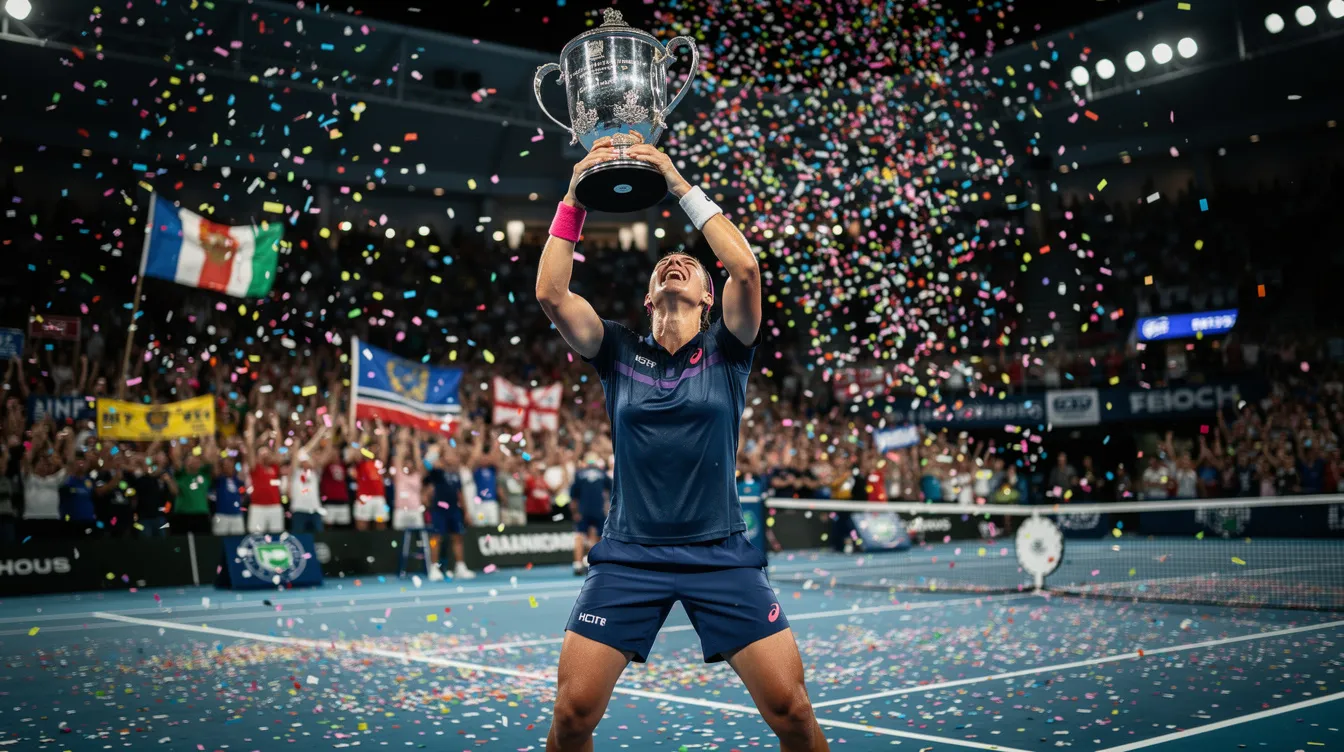
Photo credit: Getty Images / ATP Tour
2. Weeks at World No. 1 Record
Djokovic has held the world No. 1 ranking for over 428 weeks total between 2011 and 2024, shattering the previous record held by Roger Federer at 310 weeks. He finished as the year-end world no. 1 a record eight times, demonstrating a level of sustained dominance across more than a decade that the sport had never seen before.
He first reached the top of the rankings in July 2011, regained the position multiple times after brief absences, and continued to hold or reclaim it well into his mid-thirties. His rankings consistency is one of the key reasons analysts consider him the greatest of all time.
3. Olympic Gold Completion
At the 2024 Paris Olympics, Djokovic won his first Olympic gold medal in singles, defeating Carlos Alcaraz in the final. This victory allowed him to complete the Career Golden Slam, meaning he has won all four Grand Slam tournaments plus an Olympic gold medal in singles.
Previously, he had earned bronze medals at the 2008 Beijing Olympics and the 2020 Tokyo Olympics. The golden moment in Paris was emotional. Djokovic wept on the court, calling it one of the most important victories of his career. The olympic gold was the one piece missing from arguably the most complete trophy cabinet in tennis history.
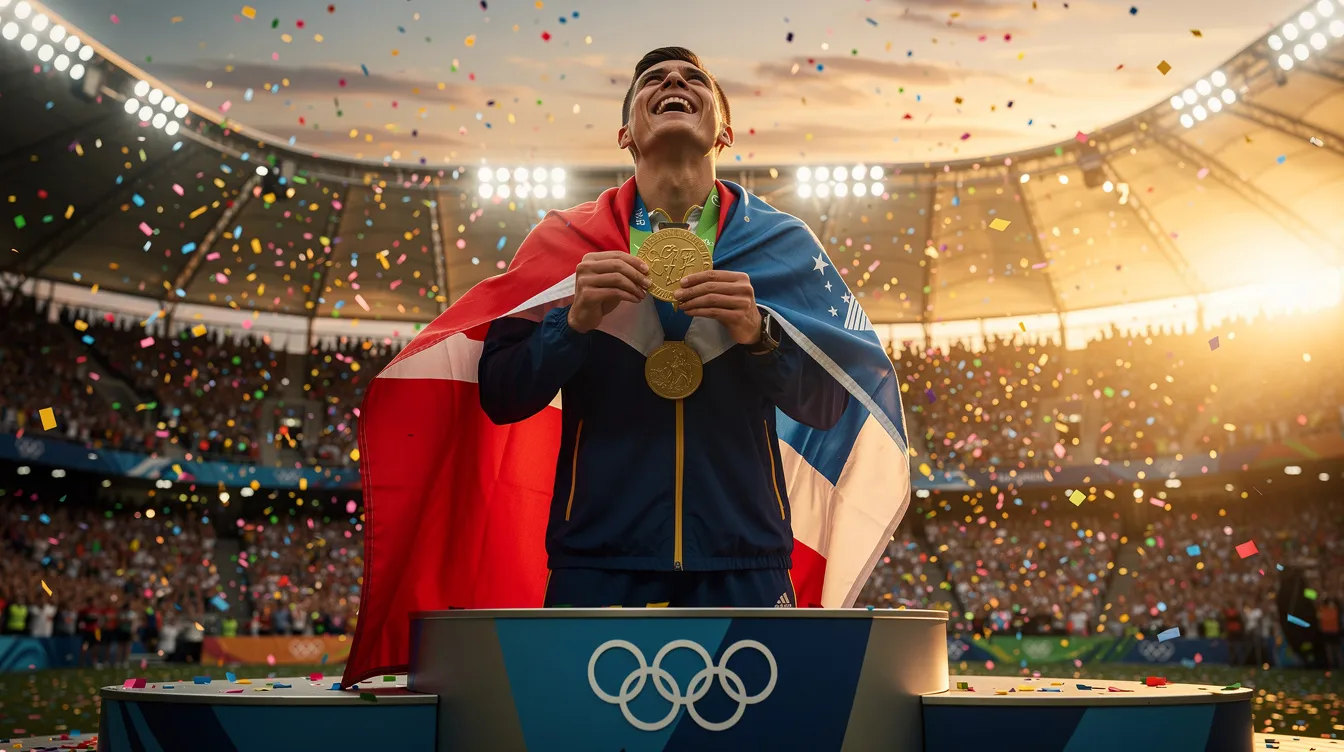
Photo credit: AP / Olympic Media
4. Masters 1000 Perfection
Djokovic is the only player in history to win all nine ATP Masters 1000 events, a feat known as the Career Golden Masters. He completed this achievement in 2018 at the Cincinnati Masters (also called Indian Wells' sister event in the USA swing) and has since accumulated 40 Masters 1000 titles, the most of any player.
His first masters title came at the 2007 Miami Open, and he has won at Indian Wells, Monte Carlo, Madrid, Rome, Canada, Cincinnati, Shanghai, and Paris across his career. His match-win record at the Masters level sits at approximately 81.9%, an absurd mark for any event, let alone the most competitive tier below the Grand Slams.
He is known for his exceptional return of serve, and he has a specialized ability to neutralize powerful serves during matches, which is a major reason he dominates in these best-of-three-set formats where a single break of serve can decide everything.
Losing doubles you should win?
The Doubles Blueprint fixes the three positioning mistakes costing you matches — in about 20 minutes. .
Get the Blueprint →Used by 25,000+ players
Weak or inconsistent serve?
The 5-Minute Power Serve Sequence fixes your racket drop — add up to 15 mph without swinging harder. .
Get the Sequence →5 minutes on court
Stuck at 3.5 singles?
The 4.0 Singles Blueprint shows the three decision-making fixes that win matches — no new strokes required. .
Get the Blueprint →About 20 minutes
5. Big Three Dominance
Djokovic holds a winning head-to-head record against both Federer and Nadal, the two other members of tennis's legendary Big Three. This trio dominated major tournaments for over a decade, collectively winning more than 60 Grand Slam titles and pushing each other to extraordinary heights.
What sets Djokovic apart in this rivalry is his ability to beat both players at their best venues. He defeated Nadal in open final after open final at the Australian Open and beat Federer in epic Wimbledon finals. In match play, which involves competing against one opponent at a time, Djokovic's ability to adapt his strategy based on his opponent is unmatched. Match play can lead to different strategies than stroke play in golf, and similarly in tennis, the direct head-to-head nature of singles means the player with the most points wins the match. Djokovic won more of those direct battles than anyone.
Players score points based on winning individual games and sets, and match play is commonly used in tennis tournaments at every level. Djokovic claimed victories in some of the most iconic finals in the history of the sport.
Early Life & Development
6. Discovered at Age Six
Born on 22 May 1987 in Belgrade, Serbia, Novak Djokovic was discovered by legendary Serbian coach Jelena Genčić at a summer tennis camp when he was just six years old. Genčić, who had previously coached Monica Seles, famously said she had found the greatest talent she had ever seen.
Genčić coached Djokovic until he was about 13 years old, instilling in him not just tennis fundamentals but also a broader education that included music, languages, and mental discipline. He attended a tennis camp in Novi Sad as a child, and those early sessions laid the foundation for everything that followed.
Practice partners enhance tennis skills and match experience, and even at that young age, Djokovic's parents ensured he had access to competitive training environments. Finding local practice partners can improve game performance at any age, and practice partners can be found through community platforms, a concept that was far less accessible in 1990s Serbia than it is today.
7. Started Tennis at Four
Djokovic began playing tennis at age four. His parents gave him a mini racket and a soft foam ball, and he started hitting against walls near a ski slope where his father worked as a ski instructor. He began attending tennis camps at age four, and those early experiences with a racket and a ball ignited a passion that would reshape tennis history.
His family recognized his athletic potential early. His parents were not wealthy, running a pizza restaurant in Belgrade, Serbia, but they invested everything they had into their son's development. The family made enormous sacrifices, and tennis became the center of their world.
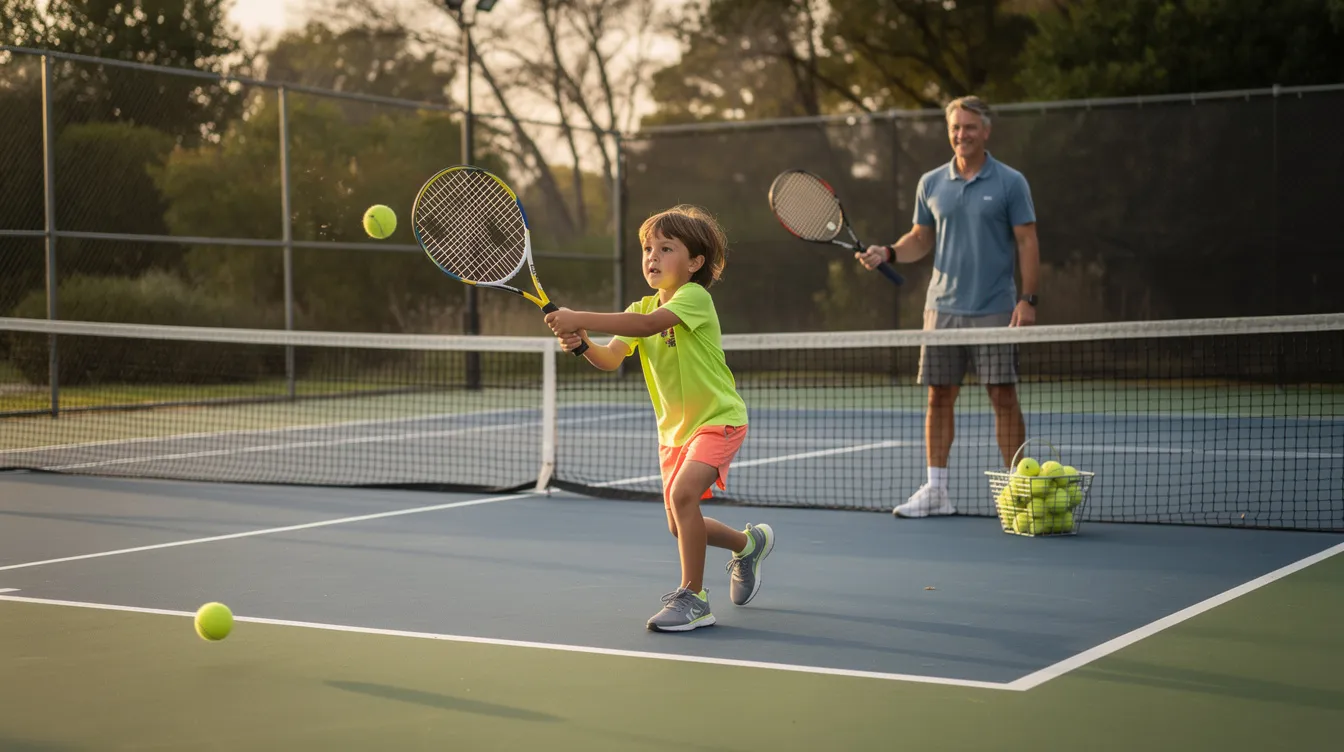
Photo credit: Novak Djokovic Foundation
8. War-Time Training
Djokovic grew up during the Yugoslav Wars, and his early training took place under extraordinary circumstances. NATO bombing campaigns sometimes forced him to practice in makeshift facilities. According to multiple biographical accounts, he sometimes trained on a court made from a disused swimming pool.
Djokovic's parents took high-interest loans to fund his tennis training abroad, shouldering enormous financial risk and high cost to give their son a chance. The family's sacrifice during this turbulent period in their country's history is a crucial part of understanding what drives Djokovic's competitiveness. Djokovic's training included serving against a wall for technique, a drill that many recreational players still use today when they practice tennis at home.
9. International Career at 14
He moved to the Pilić tennis academy in September 1999, where he trained at the Pilić tennis academy in Germany for four years. Under coach Nikola Pilić's guidance, Djokovic transformed from a promising Serbian junior into an internationally competitive player.
Djokovic won the U14 European Championship in 2001 and was ranked No. 1 on the ETA U14 list in 2001. Djokovic's first professional tournament was at age 15, and he won his first ATP Challenger tournament in May 2004. His first ATP Tour title came at the Dutch Open in 2006, where he beat top seed players in consecutive rounds.
By the time Djokovic claimed his first Grand Slam at the 2008 Australian Open, defeating Jo-Wilfried Tsonga in straight sets in the final, the tennis world knew that a new champion had arrived. That first grand slam victory set the stage for what would become the most decorated career in men's tennis.
Personal Life & Unique Habits
10. Multilingual Communicator
Djokovic is fluent in Serbian, English, Italian, and German. He often conducts press conferences and interviews in the native language of whatever country he's playing in, a habit that has endeared him to fans worldwide.
His language skills are a product of both his multicultural upbringing and his years training in Germany. In today's tennis world, where video coaching offers on-demand tutorials from tennis professionals, language accessibility matters. Video coaching helps players improve their game conveniently, and video coaching is available for all ages and skill levels. Djokovic's multilingual ability reflects the increasingly global nature of tennis instruction and competition.
11. Traveling Poodle Companion
One of the most charming facts about Djokovic's personal life is that his pet poodle, Pierre, travels with him to tournaments around the world. Pierre has become something of a celebrity in tennis circles.
In a memorable incident, Pierre was barred from Wimbledon due to the tournament's strict rules about animals on site. The story made headlines and gave fans a glimpse into the softer, more playful side of one of tennis's most intense competitors. Djokovic has spoken about how Pierre provides comfort and a sense of home during the grueling demands of the ATP tour.

Photo credit: Instagram / @djabordje
12. Gluten-Free Diet Transformation
In 2010, Djokovic discovered a gluten intolerance with guidance from Dr. Igor Četojević, a nutritionist who would change his career trajectory. Switching to a gluten-free diet and later cutting dairy, refined sugar, and most animal products, Djokovic credits this change for transforming his ranking from a consistent No. 3 to world dominance.
Djokovic's longevity in professional tennis has been influenced by a strict diet and fitness regimen. He has maintained a strong presence in the sport across multiple eras, competing against both veteran and younger players. If you're curious about how nutrition impacts performance, what you eat before a tennis match can make a real difference in your own game.
His plant-based approach has become a model for athletes in other sports as well, proving that dietary changes can be a competitive advantage at the highest level.
13. Warm Water Only
Djokovic drinks only warm water, believing it aids digestion and supports his body's natural functions. He typically starts his mornings with warm water and lemon before any food.
This is part of his broader holistic approach to health and nutrition, which also includes specific stretching routines and morning rituals designed to prepare his body for the physical demands of professional tennis. While it may seem like a small detail, Djokovic believes that these daily habits are the foundation of his ability to compete at a high level well into his late thirties.
14. Multi-Million Dollar Fortune
Djokovic's career prize money exceeds approximately US$193 million, making him the highest-earning tennis player in terms of on-court winnings. His estimated net worth is over $200 million when endorsements, appearances, and business ventures are factored in, according to Forbes.
| Earnings Category | Approximate Amount |
|---|---|
| Career Prize Money | ~$193 million |
| Endorsements & Business | ~$30+ million |
| Estimated Net Worth | ~$220 million |
His total of 101 singles titles across the ATP tour, combined with his record at major tournaments, has generated a fortune that reflects his complete dominance over two decades of professional tennis.
Beliefs & Personal Philosophy
15. Serbian Orthodox Faith
Djokovic was born in Belgrade, Serbia and was baptized as a Serbian Orthodox Christian in 1992. His faith has been a consistent thread throughout his life and career. He has been awarded the Order of St. Sava, one of the highest honors in the Serbian Orthodox Church, for his charitable work and contributions to Serbian society.
His residence has moved between Monte Carlo, Spain, and Serbia over the years, but he has always maintained strong ties to his Serbian identity and Orthodox Christian heritage.
16. Meditation Practice
Djokovic practices meditation regularly, including visits to the Buddhist Buddhapadipa Temple near Wimbledon during the Championships. He has also visited meditation sites in Bosnia for mental focus and spiritual renewal.
His mental toughness on court is widely considered among the best in tennis history, and he credits meditation and mindfulness as key tools in his psychological arsenal. Tennis clinics cater to all skill levels, and clinics often include group training sessions that address the mental side of the game. Tennis clinics can improve specific skills like serving, but the mental dimension is often what separates good players from great ones. Many clinics are available during school holidays, and tennis clinics often feature professional coaching staff who incorporate mental training into their programs.
17. Natural Healing Advocate
Djokovic believes in natural healing and holistic medicine. He has expressed skepticism about surgeries and medications, preferring to explore alternative approaches whenever possible. After undergoing elbow surgery in 2018, he spoke publicly about the emotional difficulty of the experience and his reluctance to undergo medical procedures.
He also follows ideas about the emotional influence on water and food, and has been known to consume water from tunnels beneath a pyramid in Bosnia, believing in its energetic properties. While these beliefs have drawn both curiosity and criticism from the press, they are consistent with his broader philosophy of self-sufficiency and natural living.
18. COVID Vaccine Stance
In one of the most publicized episodes of his career, Djokovic opposed mandatory COVID-19 vaccination requirements for the ATP tour. His unvaccinated status led to his deportation from Australia in January 2022, forcing him to miss the Australian Open as the defending champion. That early exit from the country sparked a global debate about athlete autonomy, public health, and personal freedom.
Despite the controversy and the impact on his career, Djokovic maintained his principles. He missed several major tournaments in the USA and elsewhere due to entry restrictions. The episode cost him potential Australian Open title defenses and other victories, but he returned to win more Grand Slams afterward, including a revenge-fueled victory at the 2023 Australian Open where he reclaimed the title.
Off-Court Impact & Legacy
19. Foundation for Children
Djokovic founded the Novak Djokovic Foundation in 2007, focusing on early childhood education in Serbia. The foundation has helped build schools and educational programs, with reports indicating it has supported over 20,800 children across Serbia.
His childhood experiences during wartime, where educational opportunities were scarce, directly shaped his charitable mission. The foundation hosts fundraising galas, charity matches, and community events. Local courts can be booked online for tennis play through various platforms, and many tennis facilities offer flexible booking options. Booking systems often allow players to reserve courts in advance, making it easier than ever for children to access the sport Djokovic loves.
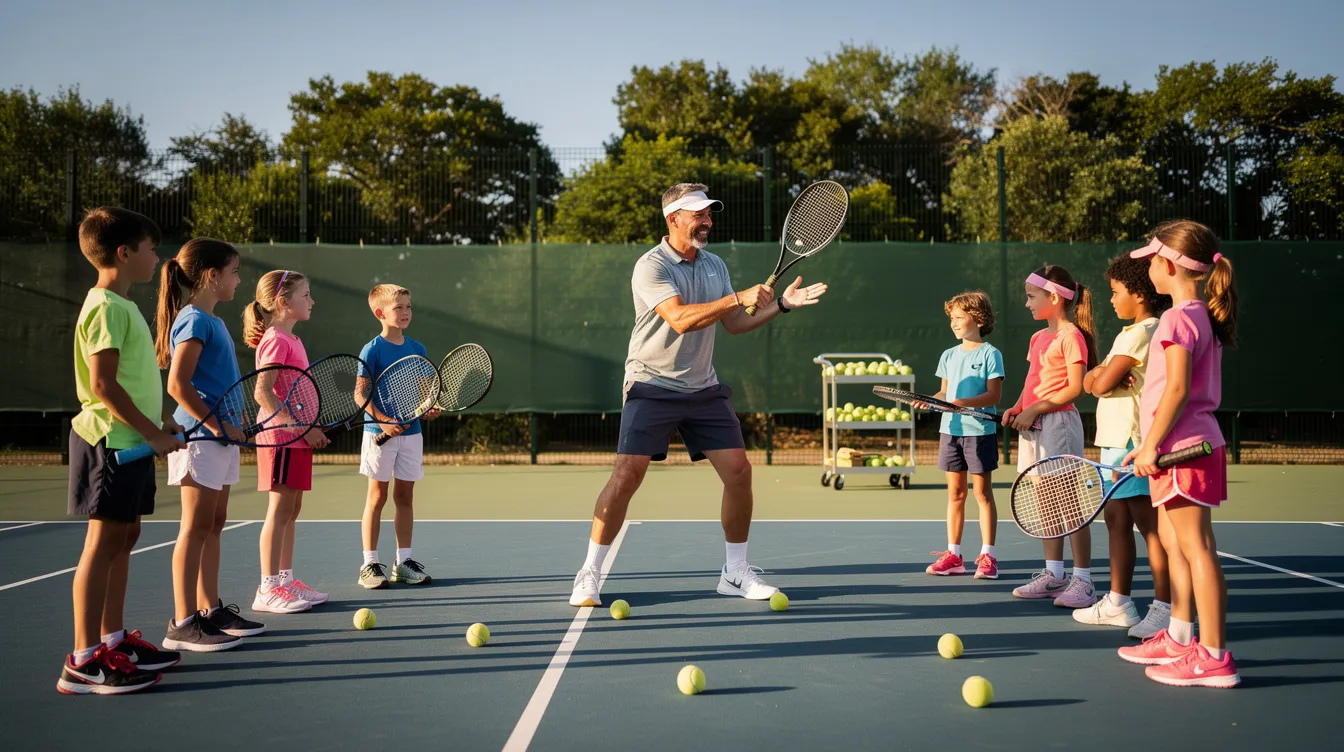
Photo credit: Novak Djokovic Foundation
20. COVID-19 Pandemic Donation
During the pandemic, Djokovic and his wife Jelena donated €1 million to Serbian hospitals to help combat COVID-19. He also participated in charity matches and fundraising events worldwide, using his platform to support healthcare workers and communities in need.
This act of generosity stood in contrast to the vaccine controversy and reminded fans that Djokovic's convictions, whatever one thinks of them, are consistently paired with tangible action.
21. Player Rights Advocate
In 2020, Djokovic co-founded the Professional Tennis Players Association (PTPA), an organization designed to increase player influence in the governance of professional tennis. He served as co-president alongside Vasek Pospisil.
The PTPA aimed to give players, particularly those ranked outside the top tier, a stronger voice in decisions about prize money distribution, tournament scheduling, and playing conditions. Djokovic stepped away from the organization in 2026, citing governance concerns, but the initiative left a lasting mark on the conversation about athlete rights in the sport.
22. Entertainment Value
Before he was known primarily as a winning machine, Djokovic gained fame for his comedic impressions of fellow players. At a 2007 event, his imitations of Nadal, Maria Sharapova, and others went viral, showcasing a playful personality that contrasted with his intense on-court demeanor.
He has appeared on TV shows, in music videos, and across mainstream media beyond tennis. His willingness to show vulnerability and humor has contributed to his global appeal, even among people who don't follow the sport closely. In the doubles arena, he has also participated in exhibition events that highlight the fun side of professional tennis.
23. Species Named After Him
In a tribute to his global impact, both a snail species and a beetle species have been named in Djokovic's honor by scientists. He has also appeared on the cover of Vogue Adria magazine and been featured in tennis video games, cementing his status as a crossover cultural figure.
These honors reflect how Djokovic's influence extends beyond the semi finals and finals of tennis tournaments into science, fashion, and digital entertainment.
24. Political Voice
Djokovic has not shied away from political expression. At the 2023 French Open, he publicly supported Serbia's claim over Kosovo, writing a political message on a camera lens after a second round match victory. The incident drew both support and backlash.
He also backed Serbian anti-corruption protests in 2024 and 2025, using his global platform to amplify domestic causes. While some believe athletes should stay out of politics, Djokovic has consistently used his visibility to speak on issues he cares about, regardless of the consequences to his public image or tournament standing. His willingness to engage with these topics, even at risk of losing sponsorships or facing tournament sanctions, reflects the same stubbornness that makes him a champion on court.
25. Champions for Peace
Djokovic is a member of the "Champions for Peace" club, an organization of elite athletes who promote global peace through sport. He supports the idea that sport is a universal language capable of overcoming divisions of nationality, religion, and politics.
He maintains friendships with athletes across different sports and countries, and he has spoken at international events about the power of athletics to inspire social change. For Djokovic, being a champion means more than winning trophies. It means using influence to achieve something bigger.
Quick Facts Summary by Category
Here's a quick-reference breakdown of the key facts:
| Category | Key Facts |
|---|---|
| Tennis Records | 24 Grand Slams, 428 weeks at No. 1, Golden Slam complete, 40 Masters 1000 titles, 101 career titles |
| Personal Habits | Gluten-free and plant-based diet, warm water only, pet poodle Pierre, multilingual |
| Early Development | Started at 4 with mini racket, discovered at 6, Pilić academy at 12, international career at 14 |
| Philanthropy | Novak Djokovic Foundation, schools built across Serbia, €1M COVID donation |
| Beliefs | Serbian Orthodox faith, meditation practice, natural healing advocacy |
Tennis memberships often include discounts on gear and can provide access to local practice partners, much like the support systems Djokovic relied on throughout his development. If you're inspired by his story, tennis clubs often offer flexible leagues for members, and memberships can connect players with certified tennis professionals who can help you improve. Tennis memberships cater to all ages and skill levels, making it possible for anyone to start their journey.
Tennis gear discounts are often available through membership programs, and discounts on tennis equipment can vary by retailer and season. Many tennis retailers offer seasonal sales for gear discounts, while online platforms frequently provide exclusive discounts on tennis gear. Memberships often include discounts on tennis gear and equipment, so it's worth exploring what's available in your area.
Understanding Djokovic's Multifaceted Personality
The Champion Mindset
Djokovic's dedication to perfection drives both his tennis success and his personal convictions. His strict routines, from diet to meditation to warm water rituals, are not random quirks. They are deliberate choices made by someone who believes that every detail matters. This is the same mindset that turns a second round match into a stepping stone and a semifinal loss into motivation for the next tournament.
The connection between his spiritual practices and on-court mental strength is real. When Djokovic faces a break point in the semi finals of a Grand Slam, the same focus he cultivates in meditation is what allows him to play with clarity under pressure. Adult tennis programs cater to all skill levels, and many adult tennis classes focus on improving skills and fitness with this same holistic philosophy. Adult tennis leagues offer competitive match play opportunities that test your mental game, and tennis instruction for adults is available through various platforms like PlayYourCourt. Adult tennis programs often include social events and networking, building the kind of community that keeps players motivated.
If you're looking to train for tennis with even a fraction of Djokovic's intensity, understanding this mind-body connection is essential.
The Humanitarian
Djokovic's childhood experiences during the Yugoslav Wars shaped his charitable mission in profound ways. Growing up in a country at war, with limited resources and uncertain futures, gave him a perspective that wealth and fame alone could never provide. His foundation's focus on early childhood education reflects a personal understanding that opportunity is not equally distributed.
The balance between personal wealth and giving back to community is something Djokovic takes seriously. He has repeatedly said that his greatest legacy will not be his Grand Slam count but the children who receive education through his foundation's work.
The Controversial Figure
Djokovic's strong personal beliefs sometimes conflict with mainstream expectations. His vaccine stance cost him tournaments. His political statements draw criticism. His alternative health practices raise eyebrows in medical communities.
But understanding his willingness to sacrifice career opportunities for principles is key to understanding him as a person. He has never been the most popular player on tour. He has often been the top seed who enters a Grand Slam final as the crowd's least favorite. He has experienced beating opponents while the stadium cheered against him. And yet he continues to win, to speak his mind, and to live according to his values.
This willingness to absorb losing public support while winning on court is perhaps his most remarkable quality.
Why Djokovic Remains Tennis's Most Compelling Figure
These 25 facts reveal a complexity that goes far beyond tennis achievements. Djokovic is not just a man who has won more Grand Slams than anyone else. He is a wartime survivor, a diet revolutionary, a meditation practitioner, a political voice, a poodle owner, and a philanthropist who remembers what it was like to have nothing.
The greatest athletes are often the most interesting as complete human beings, and Djokovic is the living proof of that. His ongoing impact, both on and off the court, continues to shape the sport and inspire debate. As of this date, he remains active in professional tennis, still chasing victories and still refusing to compromise on his beliefs.
He has been a defending champion at virtually every major event on the calendar. He has experienced early exit heartbreaks and epic revenge victories in equal measure. He has defeated virtually every top seed from every era. His story is far from over.
Final Thoughts
Djokovic's greatness extends far beyond his 24 Grand Slam titles and 428 weeks at No. 1. His personal convictions, unique habits, and willingness to stand alone contribute to a legendary status that transcends tennis. Understanding these facts helps fans appreciate the complete person behind the champion, not just the forehand and the trophy lifts.
His influence on tennis and society will likely continue for years to come, whether he's competing in tournaments, building schools in Serbia, or simply walking his poodle Pierre through the streets of Monte Carlo.
If Djokovic's story inspires you to get started playing tennis, remember that every champion started somewhere. Djokovic started at age four with a mini racket and a foam ball. Your journey starts whenever you decide to step on the court.
Keep Improving

Similar Posts
- Find Tennis Partners Fitness Home Page Feature Improve My Game Quality Family Time Tennis Tennis Tips for Kids
Reasons You Should Play Tennis
Thinking about learning to play tennis? Or maybe picking up a racket after years away from the sport? There’s so many reasons why you should! Read below our countdown of the top 10 reasons to play tennis brought to you by PlayTennis.com.
Tips on Choosing Tennis Apparel
There are certain considerations concerning tennis apparel that you need to have in mind once you start choosing the perfect garments. Since tennis consists of many different movements, you certainly need to look for functionality. You need to be comfortable while playing and be able to move freely. When it comes to choosing a material,…