What Sharapova’s Failed Drug Test Means for Tennis
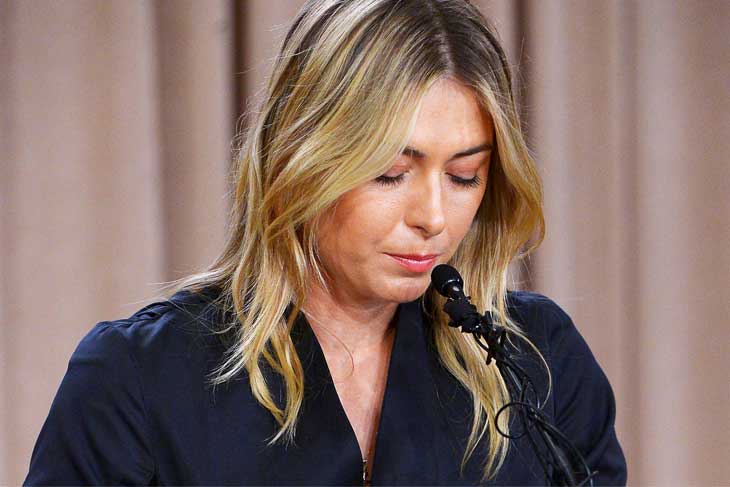
Sharapova’s recent admission of guilt for using the banned substance Meldonium has sent shockwaves through the tennis world. Though the (hypothetical) doping is cause for concern itself, the bigger questions that it brings to light are much more troubling. First, let’s take a look at the allegations themselves. Sharapova was allegedly prescribed Meldonium in 2006, and has been on the drug ever since. It’s medical use is to treat heart problems, giving patients better blood circulation, improved quality of life, and exercise capacity. She originally took the drug because she was regularly falling ill. What is unclear, however, is why she has been taking it regularly ever since. The typical course of Meldonium lasts only 4-6 weeks, and yet she has been on the drug for a decade. Looking at it in a vacuum, the benefits of Meldonium, in increasing exercise capacity, simply scream performance enhancing drug, and it makes sense that it was added to the banned substance list this year. It has been banned in other sports for much longer, and it seems unlikely that Sharapova was unaware of its benefits outside normal prescriptions.
The next question is: how can a star of her caliber, in fact, the richest female athlete alive, have been allowed to take this drug for so long, and after it had been banned, without knowing that? She is followed around the world with an entourage of doctors and trainers, and yet not a single one of them, let alone Maria herself, took the time to look at the updated banned substance list. Seems unlikely, at best. Her fellow competitors have since come out to say that they are hyper-aware of the banned list, as even some everyday medications fall onto the list. Feigning ignorance is not the honesty that her fans, and tennis fans in general, deserve. We are wiser than that, and she should not be applauded for admitting guilt. Rather, we should question how she allowed this to happen.
The biggest question, and most important, is this: What does this high-profile looming suspension mean for tennis? Fresh off a betting scandal at the Australian Open, tennis was already in the spotlight for negative reasons. Now, in a sport that has been known for loose performance enhancing drug testing protocols, it is once again thrust into the spotlight as one of the highest profile players in the world has taken a historic fall from grace. Tennis has a decision to make with how they handle this. They need to make an example of Sharapova, and tighten up their testing protocols. It brings to light questions about whether or not PEDs have been allowed to run rampant in the sport for the last decade, and maybe longer. It casts shadows on arguably the greatest era of male tennis in the history of the game, despite the fact that there has not been a comparable situation in the men’s game. Sure, the substance that Sharapova tested positive for was only recently added to the list, but with known performance benefits and an admittedly weak testing system, we are now as unsure as ever as to whether or not PEDs have been a problem in tennis recently.
Alas, we will likely never know. The WTA and ATP Tours will keep their conversations behind closed doors, and likely give vague answers to the media. Sharapova will likely get a punishment much weaker than fits the crime, because she is their golden child, and a major part of their marketing machine. All we can do is hope that they don’t mishandle it completely, and hope that the health of the game, and it’s sterling image in the last 15 years, doesn’t take too big a hit because of it. Tennis’ governing bodies have a choice to make, and hopefully it is the right one.
[sc:article_banner_1]


I don’t think it fair to only give her a slap on the wrist, I don’t care how big of a star she is. If the punishment does not fit the crime, tennis will have the appearance of being liberal in its handling of its athletes and their PED usage.
This is all over kill!! ALL the players are nervous about this and how they may at some point be targeted for using a medication on the “bad” list. Give her the fine/band and move on. We’re trying to enjoy Tennis matches as the season is underway. PLEASE just move on!!
Wow ~~~ does the effect lessen a lot after the first 6 weeks ??? But why for so long then??? Doctors’ credibility is shot here too ~~~ WTA and ATP take hits as well ~~~ Sheesh ~~~ : (
i am a tennis coach and played briefly on the atp tour…i am totally against performance enhancing drugs-especially those that have been taken by other athletes (russian) with the intentions of gaining an edge. as for maria- she should
get a 6mo suspension and if caught using
again- then a lifetime ban. the minimum
suspension by wada is 2 years if the player
didn’t know and 4 years if they did know.
it will be interesting to see how the penalty
is handed down to sharapova. it appears…
that there is a bit of jealousy and envy going around toward maria by the other girls on tour and even some of the men-
on how they’ve spoken out about this
drug case. a full drug test should be rendered to all professional tennis players
before they step on the court before a match. there have got to be at least 50
more players out there that have dirty drug laundry.
have a nice day
rr
She is not alone
I have been a fan of Maria for years. Just didn’t like her screeching on every hit. We will probably never know for sure whether her explanation is truthful. If she continued taking the drug after being aware it was now banned, it would have been a stupid play on her part or the part of her doctors. She is intelligent enough to know she would be caught on the next drug test. I’m inclined to think she must have overlooked the notice she received, as she has indicated. Perhaps the officials should look into why she has been taking the drug for 10 years and whether she had a condition that persisted which made taking it necessary. There are questions that need answers before assigning a penalty.
Tennis has a balancing act to manage this incredible event. Maria Sharapova is clearly due a significant ban. Period. Tennis will survive.
The big question is how Tennis will tighten the testing which needs to be addressed as everyone knows.
Cycling survived because they truely changed the landscape for the athletes and now the sport is far cleaner albeit slower.
I suspect that from a fans perspective true drug testing will shuffle the deck with respect to the rankings…..
Could be very interesting …