How To Hit A Backhand In Tennis: The Complete PlayYourCourt Guide
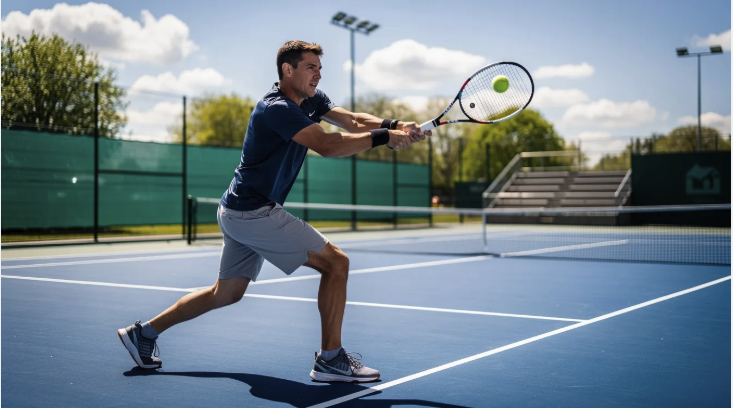
If you’ve ever had an opponent exploit your non dominant side over and over in a match, you already know why the backhand matters. This guide breaks down exactly how to hit a backhand in tennis-covering both the two handed backhand and the one handed backhand so you can stop avoiding the shot and start using it to win points.
Key Takeaways
- Executing a backhand in tennis requires proper grip and a fluid swing path. A solid backhand relies on proper grip, balance, and follow-through, and this guide walks you through every piece step by step.
- PlayYourCourt coaches recommend a two handed backhand for most beginners and intermediates because it offers more stability and control. The one handed backhand and slice backhand become valuable weapons as players progress to more advanced levels.
- The fundamentals that matter most are early preparation, a stable contact point out in front of the body, using your legs and torso to generate power (not just the arm), and recovering to a balanced position after each swing.
- Every tip in this article is drawn from thousands of coaching hours and video lessons from PlayYourCourt pros. We’ll link to specific YouTube backhand tutorials throughout so you can see these techniques in action.
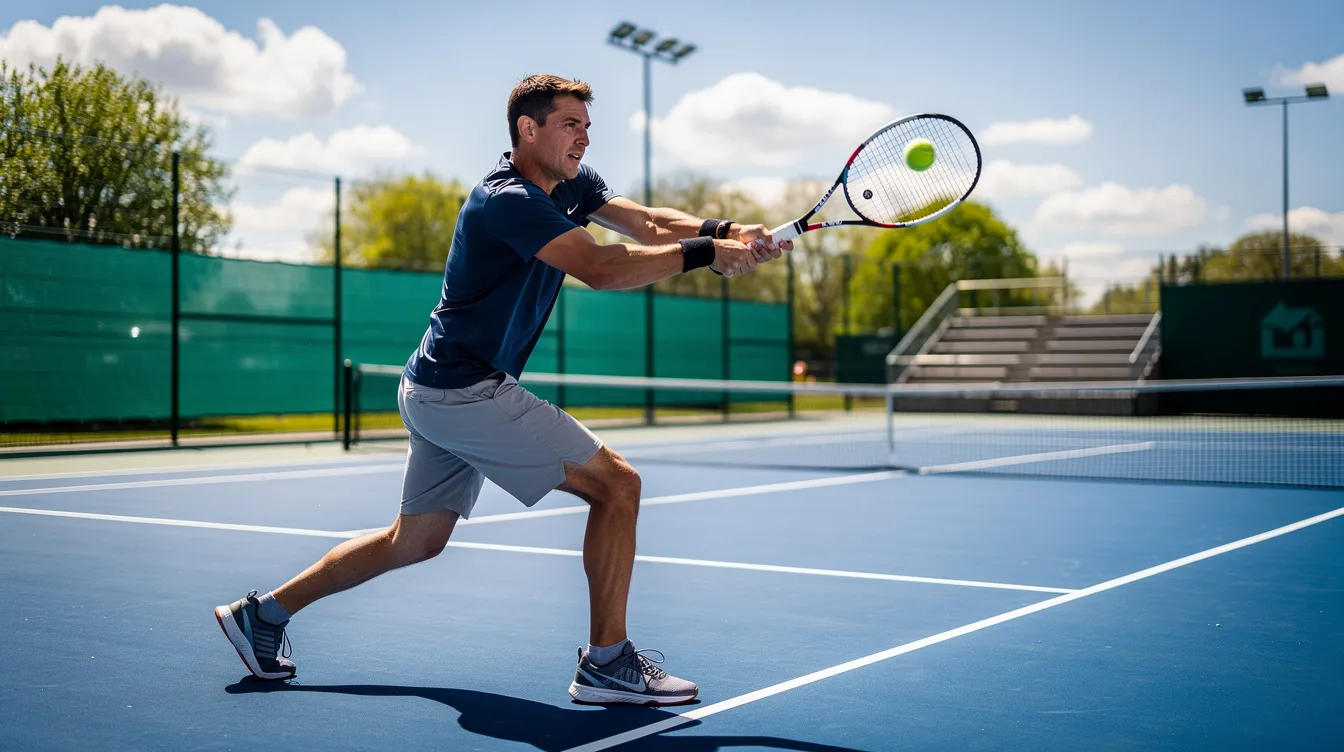
Why Your Backhand Matters (And Why You Can Trust PlayYourCourt)
The backhand is hit on nearly half of all baseline balls at club level, and it’s the first shot your opponent will target when they sense trouble. A weak backhand stroke doesn’t just lose you individual points-it changes the geometry of every rally, letting your opponent dictate play from the opening ball.
In our internal PlayYourCourt surveys of over 2,000 players, more than 70% said their backhand is the first shot to break down under pressure. That stat mirrors what the USTA’s own instructional guidance confirms: grip errors, late preparation, and failing to use body rotation are the top culprits.
Our coaching team carries decades of combined competitive playing experience and tens of thousands of on-court teaching hours with beginners through advanced players. The backhand techniques shared here are the same ones used in PlayYourCourt private tennis lessons, video coaching breakdowns, and flexible leagues-tested with real players of all ages on every type of tennis court.
“When we fix a player’s contact point and preparation on the backhand, their whole game changes in a single session,” says Coach Nate, USPTA Elite Professional.
Modern pros like Novak Djokovic and Iga Świątek dominate rallies with heavy topspin two handed backhands, proving these fundamentals scale from the local court to Grand Slam finals.
Choosing Between One-Handed And Two-Handed Backhand
The first big decision is whether to use two hands or one hand on your primary topspin backhand. Both are viable, and your choice should match your body, your game style, and your goals.
The two handed backhand is more common in modern tennis. It uses two hands on the grip for more stability, making it easier to learn and especially effective for handling high balls. Pros who rely on the two hander include Djokovic, Andy Murray, Naomi Osaka, and Carlos Alcaraz. A two-handed backhand offers more stability for beginners, and two-handed backhands provide better stability and control for beginners who are still developing timing and strength.
The one handed backhand-also called a single handed backhand-offers greater reach and variety but demands better timing and footwork. Roger Federer is known for his effective one-handed backhand, and players like Stan Wawrinka and Stefanos Tsitsipas have built careers around it. One-handed backhands require more setup time than two-handed, and they require more time to set up properly, so footwork becomes even more critical.
Best fit for a two handed backhand:
- Youth players and beginners
- Players who struggle with timing or pace
- Those who want to take balls early or neutralize high balls
Best fit for a one hander:
- Players with strong footwork and shoulder mobility
- Net-rushing, all-court style players
- Those who want maximum variety between topspin and slice
PlayYourCourt coaches usually start new players with a two handed backhand, then add a one handed slice backhand and, for some advanced players, a one handed topspin backhand later. Whichever handed backhand you choose, the essentials of preparation, swing path, and contact point covered below are very similar.
Backhand Grip Fundamentals (Two Hands And One Hand)
The grip sets the angle of the racquet face and makes topspin, slice, or flat contact easier or harder. Getting this right is worth a few minutes of deliberate practice.
For a right-handed two handed backhand: the bottom (right) dominant hand sits in a Continental grip, while the top left hand uses an Eastern forehand grip (or Semi-Western forehand). A two-handed backhand uses an Eastern or Semi-Western forehand grip for the non dominant hand. This stacked-hand position lets you swing low to high and create natural topspin.
For a one handed backhand topspin, the one-handed backhand uses an Eastern backhand grip for the dominant hand (knuckle on bevel 1). For the slice backhand, switch to a continental grip, which opens the racquet face for underspin. These are the same grips most pros use for their single handed backhand variations.
Grip pressure matters enormously. Use a grip strength of about 3 on a scale of 10. Stay relaxed during your backhand swing for better control-avoid gripping the racquet too tightly to maintain racket-head speed. Grip tightness should be around 3 on a scale of 10 to keep everything fluid.
Common grip mistakes we see:
- Using a forehand grip on the backhand side (mis-directed racquet face)
- Choking the handle with white-knuckle tension (kills spin and speed)
- Letting the top non dominant hand on a two handed backhand slide too close to the throat (loses leverage)
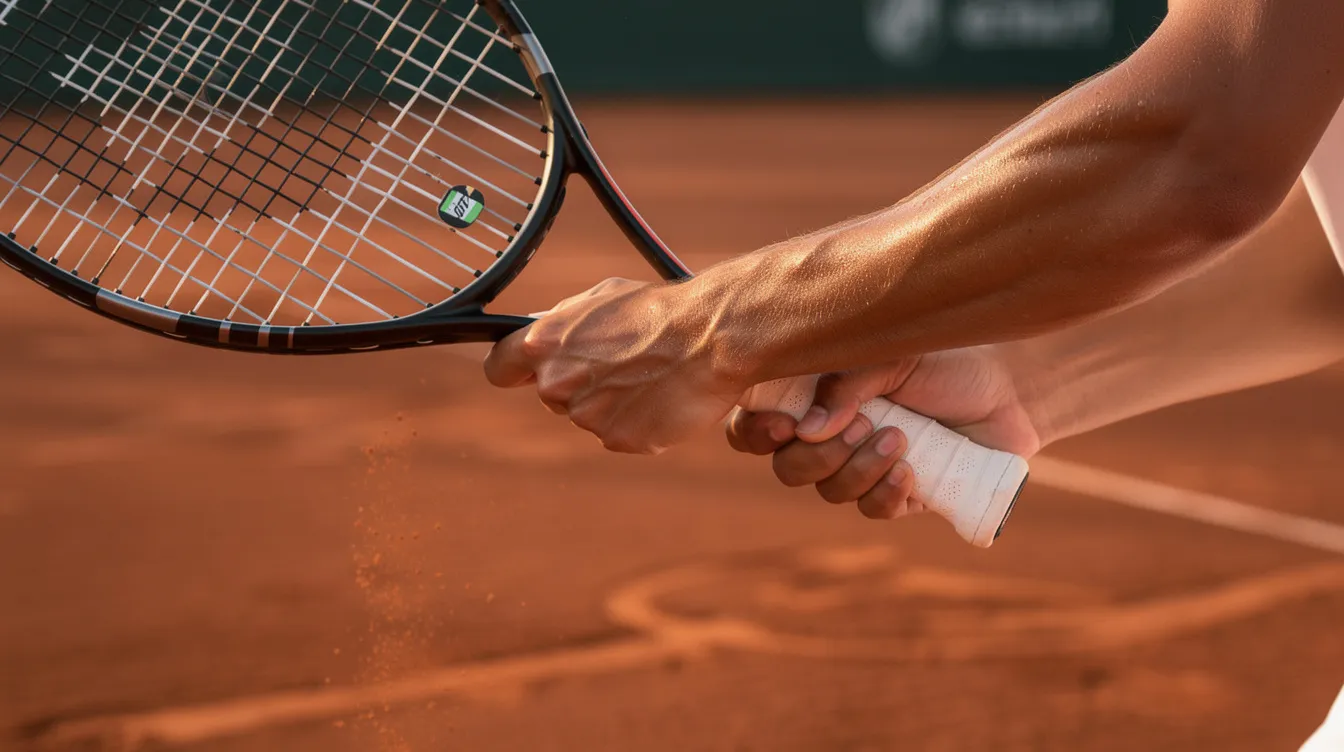
Ready Position And First Move: Step One To A Reliable Backhand
Most backhand errors start before the backhand swing even begins-in a lazy ready position or a late first move. Fix the preparation and the shot almost fixes itself.
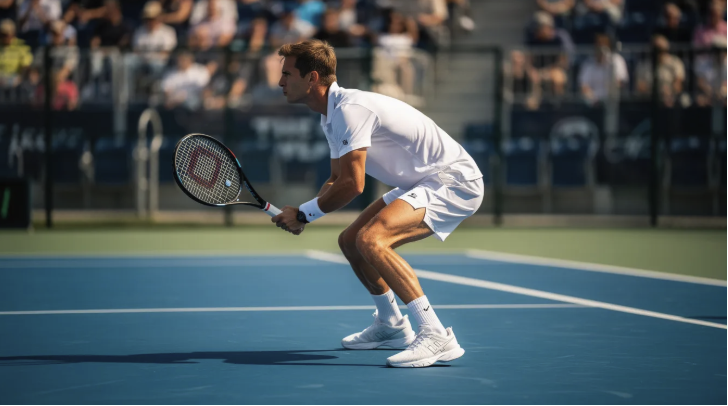
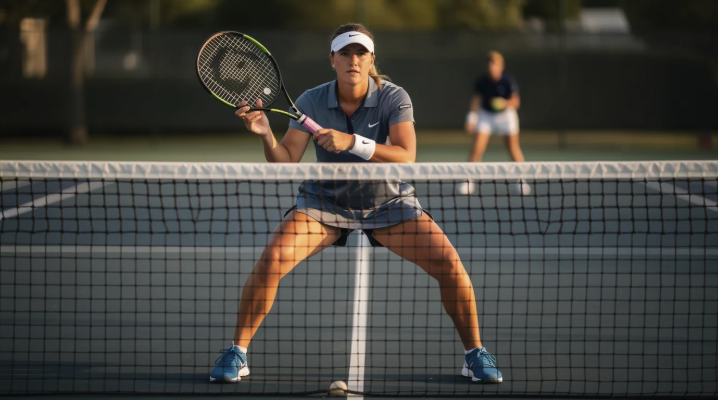
Your athletic ready position: feet shoulder-width apart, knee bend for a spring-loaded base, weight on the balls of the feet, racket held in front of the body with a neutral grip, eyes locked on the opponent. Be light on your feet during play so you can react instantly.
The critical move is the “unit turn.” Make an early unit turn and prepare the racquet as the ball approaches. Turning your shoulders prepares you for the incoming ball-rotating shoulders early enhances backhand preparation. Instead of pulling the racket back with your arm, shoulders and hips rotate together, taking the racquet back as one piece with the torso.
For a right-hander, turn so the right shoulder faces the net and your left side leads. For open stance backhands (common with a two handed backhand), the hips and shoulders still coil even if the feet stay more square. Use your dominant shoulder to track the ball as it approaches.
“If your backhand feels rushed, fix your first move, not your follow-through,” is a mantra our coaches repeat daily.
Shadow-swing drill: Split-step, unit turn to your backhand side, freeze. Check that the racquet is back and your shoulders are fully turned before you begin the swing. Repeat 20 times. No ball needed. You can find more footwork-specific drills here.
Footwork, Stance, And Positioning For A Solid Contact Point
The contact point is king. For a strong backhand you want the ball in front of the lead hip, around knee to waist height, whether you hit with two hands or one hand. Hit the ball between knee and waist height for optimal contact-contact the ball between knee and waist height for best results.
Stance options:
| Stance | Description | Best For |
|---|---|---|
| Closed | Front foot crosses over toward the net | One handed backhand, stepping into the ball |
| Neutral | Feet roughly parallel to baseline | Balanced two handed or one handed shots |
| Open stance | Feet more square to the net | Two handed backhand when reacting quickly on the run |
Move to the ball with small adjustment steps instead of one big lunge. Position your feet before the ball bounces and stay low with bent knees. Bending knees adds stability and power during a backhand. Footwork is essential for effective power in tennis strokes-footwork dictates your positioning and power in a backhand stroke.
For a right-handed two handed backhand, make contact with the ball slightly off to your left side, in front of the left hip. For a one handed backhand, the contact point sits a bit farther out with the arm more extended (biomechanics research measured SH contact at roughly 0.59 m in front versus 0.40 m for DH).
Contact point should be slightly in front of the body for effective power. Hitting the ball slightly in front improves control and power. Track the ball with your head down during the contact phase to ensure clean strings-on-ball connection.
Common mistakes:
- Hitting the ball too close to the body (jammed, weak shot)
- Leaning back at contact (loses power, reduces spin)
- Standing upright instead of staying low (no leg drive)
After each shot, recover to the middle of the baseline so you’re ready for the next ball.
Drill: Have a coach or partner toss balls and freeze at contact to verify racquet position and body alignment-a “contact point checkpoint.”
Swing Path And Finish: How To Generate Power And Spin
Once your grip, stance, and contact point are correct, the swing path and follow-through decide whether you produce heavy topspin, a flatter drive, or a controlled slice backhand.
Two handed backhand topspin: The racquet drops below the ball in a loop, then travels low to high through contact. Using a low-to-high swing path generates topspin in a backhand stroke-a good backhand requires this low-to-high swing path. Generate topspin by brushing up on the back of the ball during the swing. Finish the swing high over the dominant shoulder for topspin, with the non dominant elbow pointing roughly toward the target area.
One handed topspin backhand: The racquet loops behind the body, shoulder and hip drive forward, the arm extends fully through contact, and the racquet finishes high with the chest opening toward the net. Unlike the two hander, the one handed version demands even more shoulder rotation and precise timing.
Most of the power should come from legs, hips, and shoulders rotating-the arms act as connectors. Swing harder to hit the ball farther on your backhand, but that extra pace must originate from the ground up. Avoid “arming” the ball, which leads to inconsistent depth and can cause injury. Control the racquet face to direct the ball accurately-racket face direction determines where the ball will go.
Maintain a smooth follow-through for consistency in backhand strokes. Completing the follow-through helps maintain shot consistency. Look over the shoulder at the end of your swing to check position and ensure you’ve rotated fully.
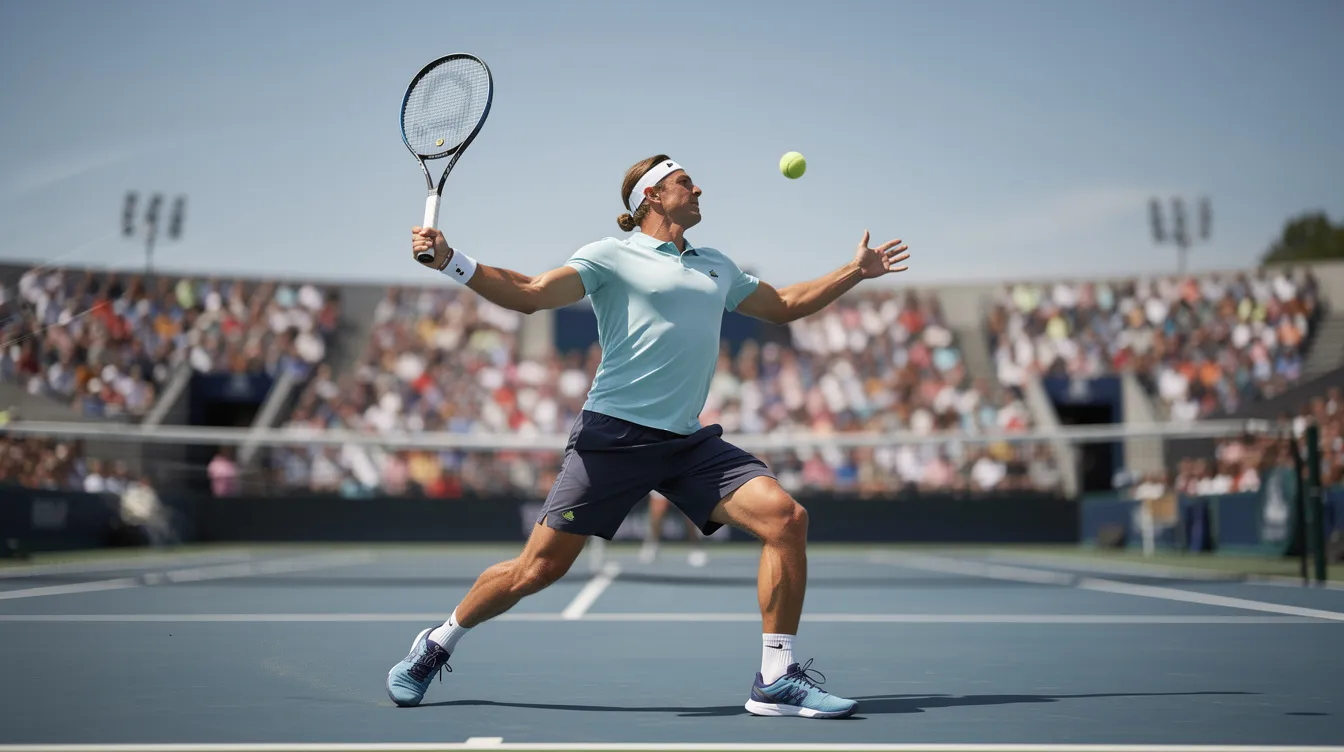
Watch our three ways to hit a tennis ball breakdown for slow-motion comparisons of flat, topspin, and slice swing paths.
Building A Reliable Slice Backhand
The slice backhand is a one hand shot most of the time-even many players with a two handed backhand switch to one hand for their slice. It’s essential for defense, low balls, approach shots, and changing pace against your opponent.
Use a continental grip, a neutral or slightly closed stance, and make contact out in front around hip to waist height. Keep your wrist firm but not locked.
The swing path is high-to-low: your racket “carves” under the ball, creating backspin so the ball skids and stays low after the bounce. This is especially effective as a powerful shot on grass and fast hard courts. The slice is a change-of-pace weapon that many players underestimate.
Mistakes our coaches catch constantly:
- Chopping too steeply downward (ball floats with no penetration)
- Swinging only with the arm instead of using shoulder turn
- Opening the racquet face too much at contact
Practice progression:
- Stationary feeds-focus on keeping the ball low over the net
- Crosscourt slice backhand rallies for depth
- Slice approach shots aiming for deep corners
Pros like Djokovic and Medvedev rely heavily on their slice backhand in defensive situations, proving a consistent slice can set up your attacking forehand or net game.
Common Backhand Mistakes (And How PlayYourCourt Fixes Them)
Most recreational players share the same handful of backhand issues. Our coaches diagnose these quickly in private lessons and video reviews.
| Mistake | Result | Fix |
|---|---|---|
| Late preparation | Ball contacted behind the body, sails long or into the net | Split-step timing practice, shadow swings emphasizing early shoulder turn |
| Wrong grip (forehand grip on backhand side) | Framed shots, lost spin, wrist discomfort | Mirror work checking hand placement, photo/video feedback |
| Collapsing front shoulder | Poor power, compromised contact point | Focus on keeping the lead shoulder elevated through the swing |
| Leaning backward at contact | Shallow shots, more net errors | Weight-shift drills, step-through footwork |
| Stopping the racquet instead of following through | Inconsistent depth and spin | Target full follow-through over the shoulder every rep |
One PlayYourCourt member shared: “I moved my contact point just six inches forward after a single video coaching session, and my two handed backhand went from floating mid-court to landing deep with topspin every time.” Small adjustments produce dramatic results.
Video coaching through PlayYourCourt lets pros analyze your one handed and two handed backhands frame-by-frame, making it easier to spot these issues remotely.
Drills, Practice Plans, And Using PlayYourCourt To Improve Faster
Consistent, structured practice turns backhand tips into a dependable shot in matches.
Solo practice routine:
- Shadow swings focusing on contact point and full follow-through (5 minutes)
- Wall hitting alternating two handed topspin and one-handed slice backhands (10 minutes)
- Cone targets on court-aim crosscourt and down-the-line (10 minutes)
Sample one-hour session with a partner or coach:
- 10 min: mini-tennis, backhands only (control and touch)
- 15 min: crosscourt rally with two handed backhands (depth and consistency)
- 15 min: slice backhand drills (feed low and wide)
- 20 min: live points where every third ball must be a backhand
PlayYourCourt members can book local certified pros who will structure custom backhand drills for their level, and find practice partners through flexible leagues and match play. Our YouTube channel hosts specific drill videos you can follow along with at home.
A mix of live coaching, video feedback, and match play is the fastest route to a reliable backhand for both adult tennis and youth tennis players.
Backhand Performance, Pro Examples, And Why This Approach Works
Watching world-class backhands helps you understand why the fundamentals taught here matter. Every elite backhand you admire on television follows these same principles.
- Novak Djokovic: Heavy, consistent two handed backhand built on early preparation, deep knee bend, and explosive hip rotation.
- Stan Wawrinka: Perhaps the most powerful shot in tennis history from the one-handed backhand side-massive loop, full extension, devastating finish.
- Ashleigh Barty: A knifing slice backhand with pinpoint placement that stayed low and skidded on fast surfaces.
Typical club players hit backhands in the 50–60 mph range, while pro-level backhand drives exceed 80–90 mph. For context, David Nalbandian recorded the fastest backhand at 110 mph. You don’t need pro-level pace-but the technique that produces it is the same technique that gives you consistency at any level of the sport.
The core concepts in this guide-early unit turn, stable contact point in front, body-driven racket swing, full follow-through-are visible in every slow-motion pro breakdown. PlayYourCourt’s technique recommendations also favor long-term joint health, supported by biomechanics research showing fewer injuries when players use whole-body mechanics.
Whether you choose a two handed backhand, a single handed backhand, or a hybrid approach with a strong slice backhand, this method gives you a clear training roadmap used successfully with thousands of members.
Frequently Asked Questions About Hitting A Backhand
Is a one handed backhand harder than a two handed backhand?
Yes. The one handed backhand requires more precise timing, greater arm strength, and better shoulder flexibility. However, it offers more reach and variety, particularly for slice and net transitions. The two handed backhand is easier for most players to stabilize and is recommended for beginners building consistency.
Where should my contact point be on a backhand?
For both topspin and slice variations, the contact point should be in front of the lead hip, between knee and waist height. Avoid letting the ball get jammed close to your body. One handed backhands require the contact point a bit farther out front than two handed backhands.
How long does it take to learn a consistent backhand?
With 1–2 focused sessions per week, many PlayYourCourt students see noticeable improvement in control, depth, and consistency within 4–6 weeks. Mastery under match pressure-including the ability to hit with pace, spin, and placement-takes several months to years of dedicated training.
Can I switch from a two handed backhand to a one handed backhand later?
It’s possible, and some players do make the switch. Most, however, keep their two handed stroke as their primary backhand and simply add a one handed slice for flexibility and variety. If you’re considering a full switch, this guide covers the four key steps.
Do I need a coach to fix my backhand?
Self-practice with video feedback and structured drills helps, but a trained coach can usually identify and correct key issues-like grip angle, racquet face alignment, or subtle shoulder positioning-much faster. PlayYourCourt makes booking a backhand-focused lesson easy through local tennis lessons or remote video coaching, so you can progress on your own schedule.
Keep Improving