Racket Drop on the Serve: What It Is and How to Fix It
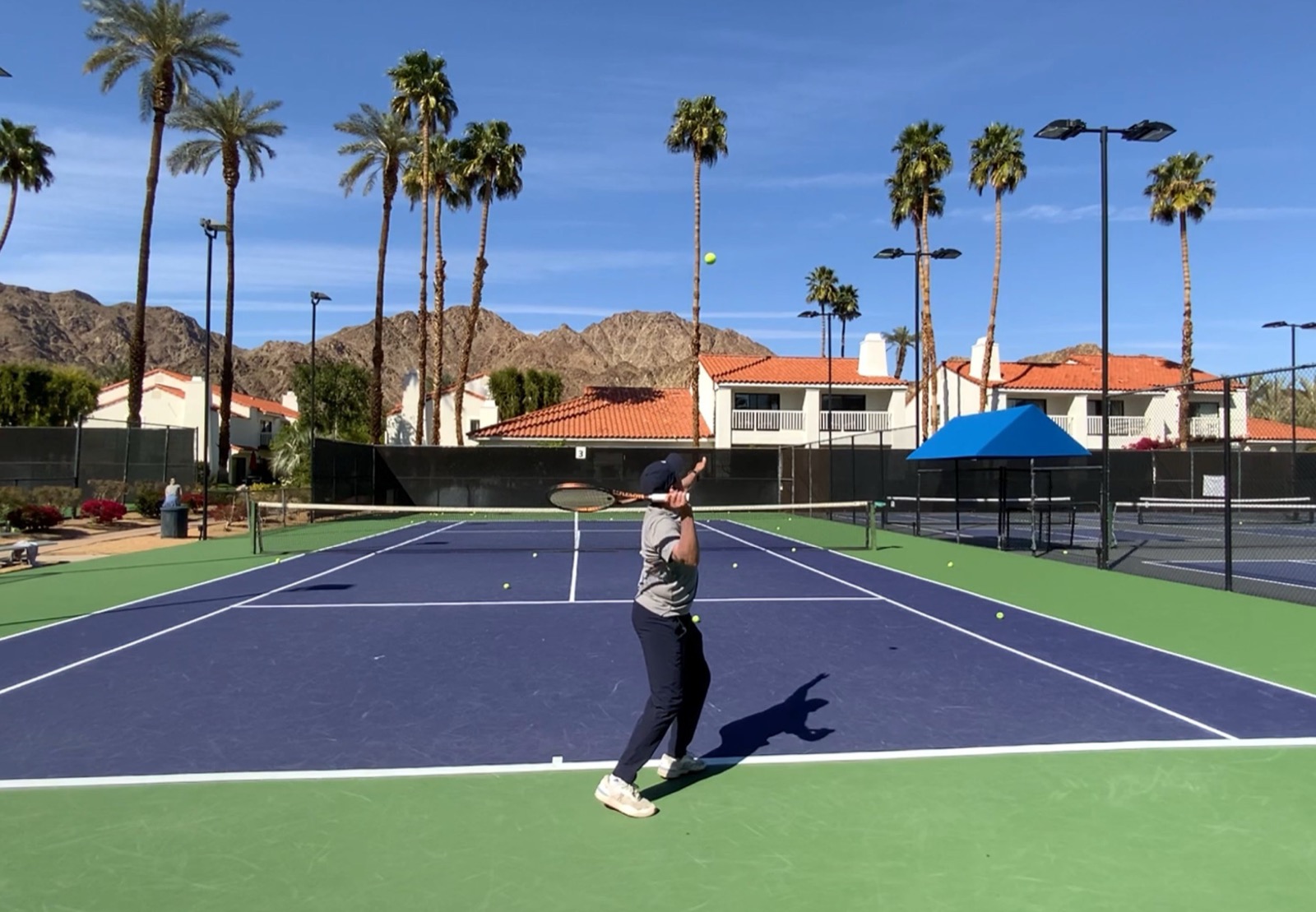
Quick answer: The racket drop is the moment in the serve when the racket falls down behind your back, tip pointing at the ground, just before you swing up to the ball. It matters because the deeper the drop, the longer the path your racket has to accelerate. Biomechanics research credits the upper arm's internal rotation, which the drop sets up, with about 40% of racket speed in a power serve. Many recreational players open the racket face skyward into a "waiter's tray" position, which can cause a shallow racket drop and limit racket speed. Fix it with three moves: get the racket into the right slot, release the tension in your arm, and connect the drop to the upswing.
What is the racket drop on a tennis serve?
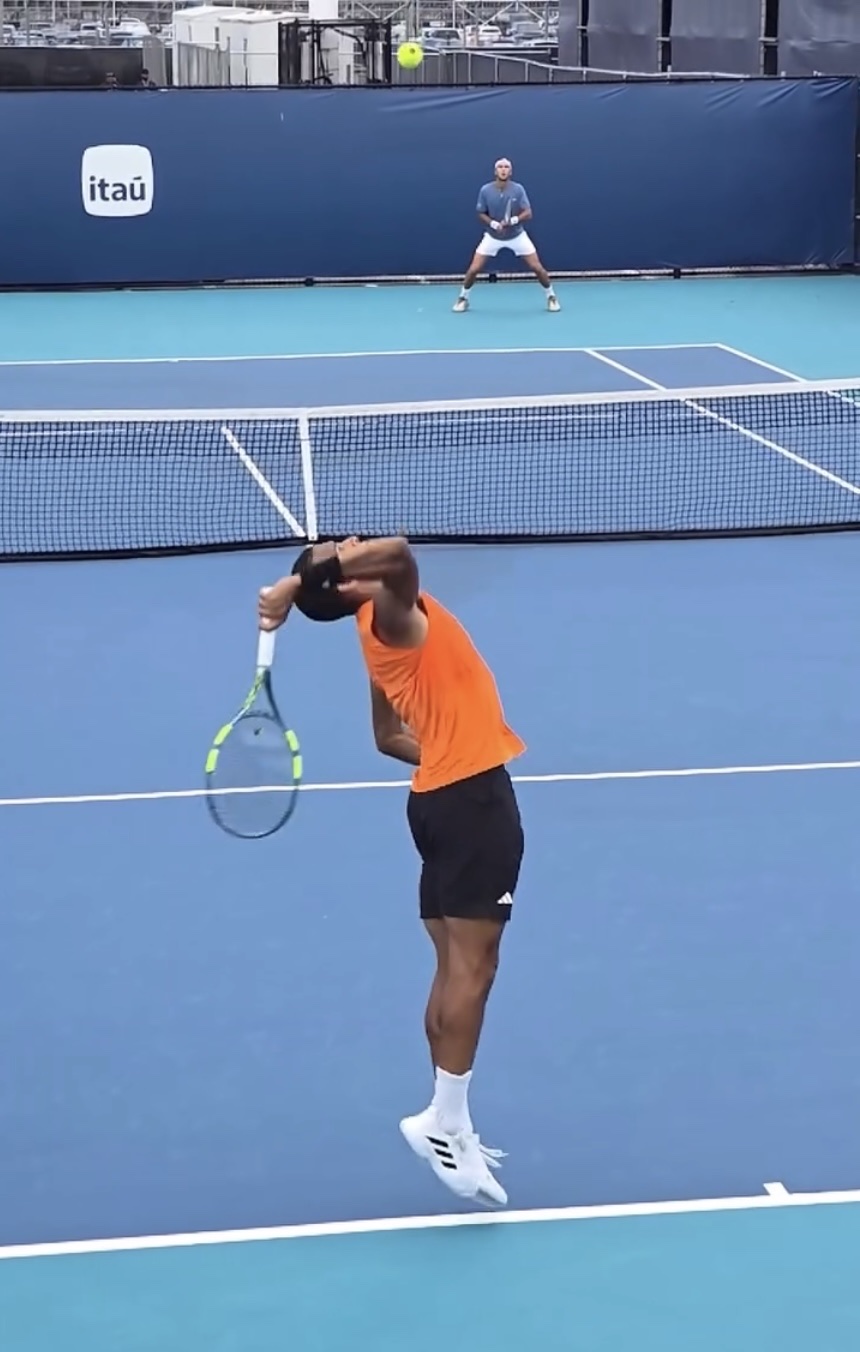
The racket drop is the low point of your service motion. After the trophy position, your racket falls behind your back, the tip points toward the court, and your elbow points up. Then the racket reverses direction and whips up to the ball.
Coaches also call it the "back scratch" position, because the racket passes close to your shoulder blades, but it should never rest against your back. On a good serve it lasts a fraction of a second, and you shouldn't be placing it there on purpose. It happens when your arm is relaxed and your racket is in the right slot.
Why does the racket drop add power to your serve?
Serve speed comes from how fast the racket head is moving at contact, not from how hard you try to swing. A deep drop gives the racket more distance to build up speed, and it stretches your shoulder so it can snap forward.
That snap is internal rotation of the upper arm, the same motion as throwing a ball. In a study of high-performance players, biomechanist Bruce Elliott found it contributes about 40% of the racket's speed at impact on a power serve (Elliott, British Journal of Sports Medicine, 2006). If your racket never drops, your arm never loads, and you lose much of that speed before you start.
This is why swinging harder rarely fixes a slow serve. Without a full drop, extra effort goes into your grip and forearm, not into racket speed.
What is the "waiter's tray" serve?
The waiter's tray is the most common serve fault we see in 3.0 to 4.0 players. As the racket comes back, the wrist bends back and the strings face the sky, as if you were balancing a tray of drinks on your palm. From there the racket can't drop behind your back. It stays up near your shoulder, and you end up pushing the ball instead of throwing the racket at it.
Signs you have it:
- Your serve feels fine in warmups and falls apart in matches.
- You miss long when you try to hit harder.
- Your second serve floats in and opponents step in to attack it.
- Your shoulder or elbow feels tired after serving practice.
It feels natural, which is why most players never notice it. Common tips like "snap your wrist" or "point the racket down your back" don't fix it, because they don't address why the racket won't drop.
When I see a waiter's tray, I look at the player's grip and how they move into the upward swing. Often, they're pushing the racket toward the ball instead of letting it drop and accelerate naturally, which limits easy power.
Nate Bolling - RSPA Elite Certified (top 1% of all coaches in the world by certification)
How do you get a deeper racket drop?
You don't force the drop. You remove what's blocking it. We teach it as three moves.
1. Find the slot
Use a continental grip and keep the racket edge, not the strings, facing the sky as you reach the trophy position. When the edge leads, the racket has a clear path to fall behind your back. When the strings face up, you're back in the waiter's tray.
2. Release the tension
A tight grip stops the racket from dropping. Hold the racket at about 3 out of 10 pressure and let gravity pull it down as your legs drive up. If you can feel the racket's weight fall, your arm is loose enough.
3. Connect the drop to the swing
Don't pause at the bottom. The drop and the upswing are one continuous motion, like cracking a whip. Pausing is how players lose the stretch in their shoulder and go back to pushing the ball.
What drill helps you feel the racket drop?
Try the drop-and-throw drill, no ball needed:
- Stand sideways in your serve stance and start with the racket already in the back-scratch position, tip down.
- Relax your grip until the racket almost slips.
- Swing up and out as if throwing the racket edge-first toward the net post.
- Do 10 reps, then 10 more starting from the trophy position so the racket has to drop on its own.
When the second set feels as loose as the first, take it to the court and hit serves at 70% effort.
Fix your racket drop in 5 minutes
The 5-Minute Power Serve Sequence is Scott and Nate's video walkthrough of these three moves, with the exact cues they use in lessons. It's $7 and comes with a 365-day guarantee.
Frequently asked questions
Is the racket drop the same as the trophy position?
No. The trophy position comes first: the racket is up, your tossing arm is extended, and your knees are bent. The racket drop comes right after, when the racket falls behind your back just before you swing up.
Should I try to touch my back with the racket?
No. Forcing the racket down your back makes you pause and tense up. A relaxed arm and the right slot let the racket drop as deep as your shoulder allows.
Can I get a deeper racket drop if I'm not flexible?
Yes. Most players are limited by tension and grip, not flexibility. Loosening your grip and fixing the waiter's tray adds depth for players of any age.
Does the racket drop help my second serve too?
Yes. A kick or slice second serve needs even more racket speed to create spin. A shallow drop is one of the main reasons second serves float in short.
Related: How to hit a faster serve · How to develop your second serve · Why your serve keeps going into the net
Keep Improving


Similar Posts
- Find Tennis Partners Fitness Home Page Feature Improve My Game Quality Family Time Tennis Tennis Tips for Kids
Reasons You Should Play Tennis
Thinking about learning to play tennis? Or maybe picking up a racket after years away from the sport? There’s so many reasons why you should! Read below our countdown of the top 10 reasons to play tennis brought to you by PlayTennis.com.
Tips on Choosing Tennis Apparel
There are certain considerations concerning tennis apparel that you need to have in mind once you start choosing the perfect garments. Since tennis consists of many different movements, you certainly need to look for functionality. You need to be comfortable while playing and be able to move freely. When it comes to choosing a material,…