Tennis Drop Shots: The Definitive How-To Guide From Coach Nate at PlayYourCourt

Most tennis players spend years perfecting their baseline game but never add the one shot that could win them the easiest points of their career. I'm Coach Nate at PlayYourCourt, and after thousands of coaching hours with players of every level, I can tell you this with certainty: a well-timed drop shot is the most underused weapon in recreational tennis. This guide breaks down everything you need to know to hit drop shots correctly, disguise them, and deploy them at the right moment to dismantle opponents who think they're safe parked behind the baseline.
Key Takeaways
- A drop shot is a soft shot that lands short in the opponent's court, just over the net, and ideally inside the service box. When executed correctly, it wins free points against players who camp at the baseline and struggle to run forward.
- The core of my method comes down to four pillars: the continental grip, a short compact swing, relaxed soft hands at contact, and disciplined shot selection that tells you when (and when not) to hit a drop shot.
- Players like Carlos Alcaraz and Novak Djokovic have turned the drop shot into a legitimate offensive shot at the highest level. At club level, applying even basic drop shot tactics can meaningfully raise your point-winning percentage.
- Below you'll find step-by-step technique, video links from the PlayYourCourt YouTube channel, common mistakes and fixes, match strategy, and FAQs so you can start adding this shot to your game immediately.
What Is a Drop Shot in Tennis (And Why You Need One Now)
I'm Nate, and I've been coaching tennis for over a decade. In that time, I've watched the drop shot completely transform matches for adult rec players and competitive juniors alike. It's not flashy. It's not risky when done right. It's surgical.
A drop shot is a very soft shot that barely clears the net and lands short in the opponent's court, typically inside the service box. The goal is to make the ball bounce twice before the opponent reaches it. Unlike a regular topspin groundstroke that carries deep with pace and spin, a good drop shot uses backspin to slow the ball down so it "dies" after the bounce, staying low and refusing to cooperate with your opponent's racquet.
Here's why it matters at club level: most recreational players camp three to five feet behind the baseline and don't move forward well. They hate bending low to scoop up short balls. Drop shots exploit that weakness ruthlessly. A single well-placed drop shot after a heavy topspin rally can steal a point in under a second, and it can disrupt an opponent's rhythm after heavy groundstrokes. Drop shots are especially effective against baseline players who avoid the net.
"The drop shot isn't a trick shot. It's a thinking player's weapon-one that rewards court awareness and punishes laziness." - Coach Nate, PlayYourCourt
The Physics and Feel of a Great Drop Shot
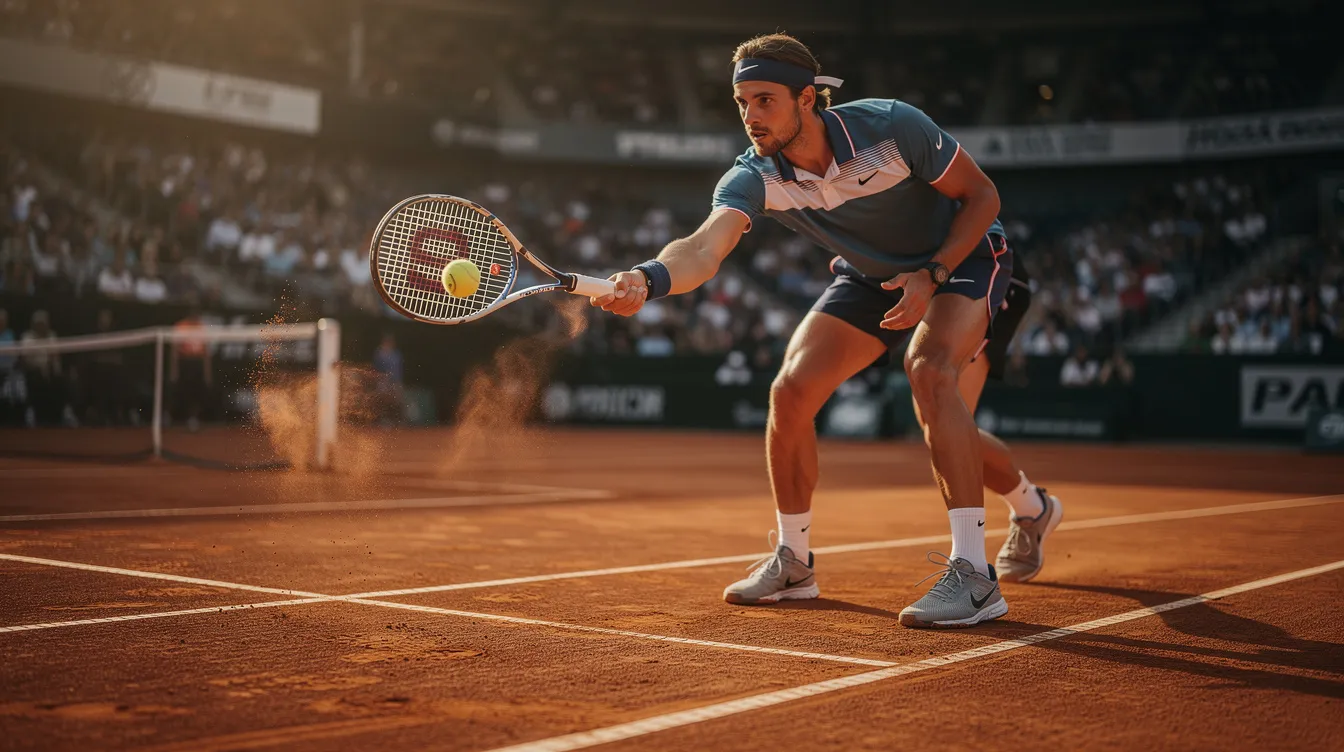
What separates a great drop shot from one that sits up and gets punished? Three measurable things: net clearance, landing depth, and deceleration. A high-quality drop shot should barely clear the net-roughly 6 to 12 inches of clearance-and land about 2 to 6 feet past the net inside the service box. After it bounces, it should lose speed rapidly so the ball bounces twice before the opponent can close the distance.
The drop shot utilizes backspin to make the ball bounce low. When you brush under the ball with an open racquet face, you create underspin that increases air resistance during flight and reduces forward momentum after the bounce. Research published in the International Journal For Multidisciplinary Research confirmed that each degree of increase in racket angle reduces horizontal launch speed by approximately 0.46 m/s, which is exactly the physics behind a ball that "dies" on contact with the court.
Think of the feel like a golf chip shot or a soft ping-pong drop: touch dominates power. For a practical benchmark at USTA 3.5–4.5 level, aim for your opponent's first contact to be at or below net height at least 60–70% of the time when they're standing behind the baseline.
Grip Essentials: Why the Continental Grip Rules the Drop Shot
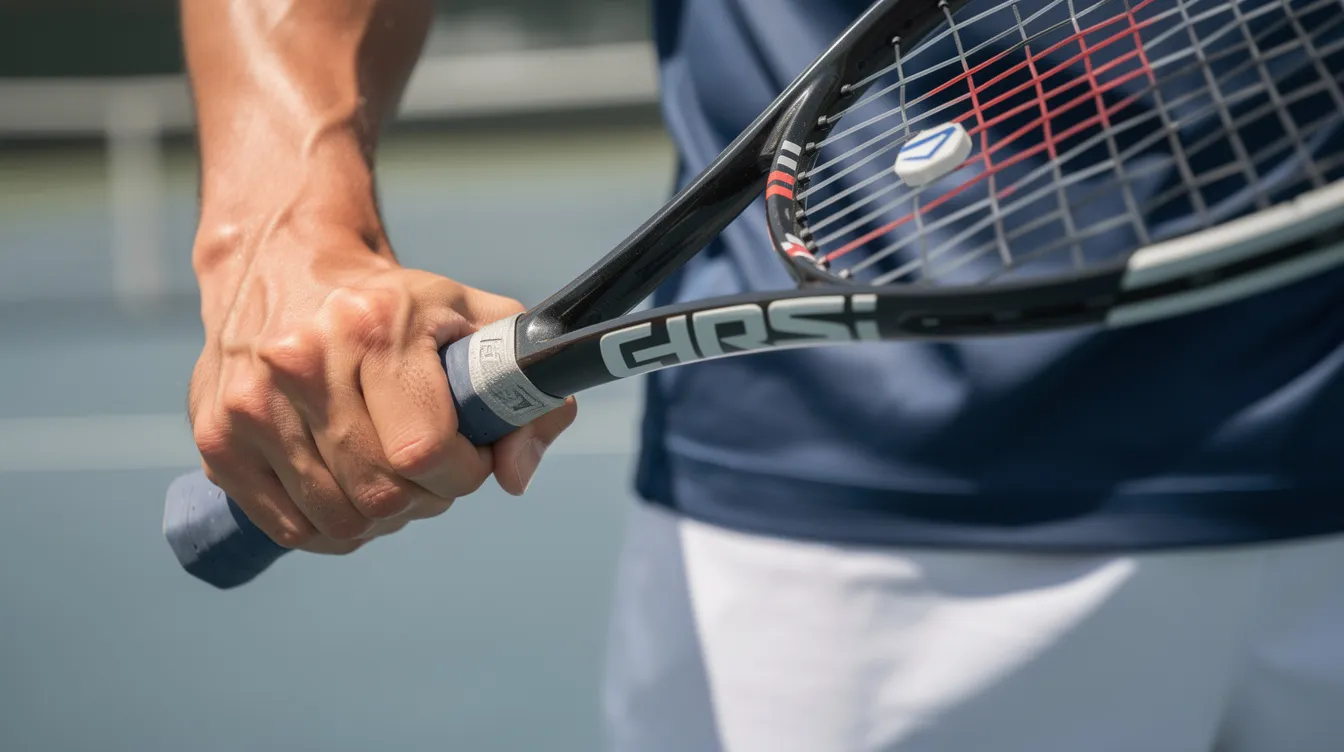
The continental grip is the foundation for every consistent drop shot I teach. It's the same grip you use for volleys, serves, and slice backhands-sometimes called the "hammer grip" because you hold the racquet like you're hammering a nail. A good drop shot uses the continental grip for better control and spin. Use the continental grip for better control and spin on both forehand and backhand sides.
Here's how to find it and why it matters:
- Place the base knuckle of your index finger on bevel 2 of the racquet handle (the narrow flat side on top when the racquet is perpendicular to the ground). For a deeper explanation, check out The GRIPS of Tennis and What We RECOMMEND.
- The continental naturally opens the racquet face, which is essential for sliding under the ball to create backspin without muscling the shot.
- If you use the same grip as your topspin forehand (semi-western or western), the racquet face closes too much. You'll generate pace and spin you don't want, and the ball will fly deep instead of dying short. That's why most club players fail at drop shots-they never change their grip.
- High-level players like Alcaraz transition from their groundstroke grip into continental at the last moment to disguise the shot. That late grip change is what prevents the opponent from reading the drop.
Try This Drill: Stand at the service line with a partner feeding slow balls. Using only the continental grip, play mini-tennis drop shots into the opposite service box. Focus on keeping the racquet face open and the motion compact. Five minutes per session builds the muscle memory.
The 5-Minute Power Serve Sequence fixes your racket drop — without swinging harder.
Step-By-Step Technique: How to Hit Drop Shots Like a Pro
This is the exact progression I use with students in lessons, from kids to competitive adults. It works because every step removes excess motion and builds control. For a video walkthrough, watch our full breakdown: How To Hit A Drop Shot In Tennis | Forehand & Backhand.
- Stance and preparation: Start in a neutral or slightly open stance with your body weight slightly forward. Keep the racquet in front of your body. Never lean back-that kills trajectory control and telegraphs the shot.
- Short backswing: Short backswings create touch for effective drop shots. Your backswing should be compact, starting roughly at shoulder height or just above the anticipated contact point. Avoid a full drive backswing; less motion means more control.
- Racquet path: Open the racquet face and brush under the ball with a gentle downward-to-forward motion. You're creating controlled backspin, not chopping at the ball. Think "slide under" rather than "slice down."
- Contact point: Make contact in front of your body, not beside or behind it. Maintaining soft hands allows you to absorb the ball's energy without hitting too hard. I tell students to grip at "3 out of 10" pressure-just enough to keep the racquet from flying out of your hand.
- Follow-through: Abbreviated. The racquet face finishes pointing toward your target area, with very little wrap-around. Stop the motion shortly after contact. This is not a stroke-it's a touch.
- Recovery: Players should recover immediately after hitting a drop shot to prepare for the next shot. Follow your drop shot to the net for better court position. If you stay on the baseline after dropping, you're giving your opponent a free pass to lob or angle past you.
A drop shot should barely clear the net and land inside the front half of the service box when your opponent is deep. Aim for the ball to bounce low and slow enough that they can't reach it at full speed.
Forehand vs. Backhand Drop Shots
Most players find one side easier at first. I almost always teach the backhand drop shot first because it builds naturally from a standard slice backhand, where the continental grip and open face are already in play.
- Backhand drop shot: Easier to disguise because the slice backhand preparation looks identical. Your non-dominant hand helps stabilize the racquet for better control. Djokovic is the gold standard here-his backhand drop is legendary because his takeback looks like a regular drive until the last possible moment.
- Forehand drop shot: Requires a deliberate grip change from semi-western or western to continental, which can feel awkward at first. Alcaraz has made this his signature, taking back as if loading his massive topspin forehand, then opening the face at contact to drop the ball softly into space. His forehand drop shot success rate is roughly 67.7%, compared to the ATP average of about 51.5%.
- A drop volley is similar to a drop shot but hit before the ball bounces, typically when you're already close to the net. It requires even softer hands and is worth exploring once your groundstroke drop shot feels reliable. For volley fundamentals, see How To Volley In Tennis.
Practice both sides during the same session, but pick one "money side" for match play first. Track which side wins you more points and build confidence from there.
When to Hit Drop Shots (And When Not To)
Most club players lose points with drop shots not because of bad technique, but because of terrible timing. Drop shots are effective when the opponent is out of position, and that's the single most important principle to internalize.
Hit drop shots when:
- Your opponent is positioned far behind the baseline or running backwards after a deep rally
- You've just hit a heavy topspin ball that pushed them back, and they're standing off balance
- Your opponent is visibly tired or has slower foot speed
- You're playing on clay or a slow hard court where the ball grips the surface
- You want to surprise an opponent who has settled into a comfortable baseline rhythm
Don't hit drop shots when:
- You're standing three or more feet behind the baseline-hitting a drop shot from deep behind the baseline gives the opponent too much time to reach it
- You're off balance, stretched wide, or on the run
- Your opponent is already close to the net or moving forward
- You've already hit two or three drop shots recently and the element of surprise is gone
- Conditions are windy or the court surface is extremely fast
Timing is crucial; drop shots can lead to lost points if mistimed. The drop shot is effective against fatigued opponents or those with slower foot speed, but only when you decide to deploy it from a position of strength, not desperation.
I had a student last year-a 4.0 player-who was losing the first set 2-5 against a hard-hitting baseliner. We adjusted between sets: she used just four well-chosen drop shots in the second set, all after pushing her opponent deep with crosscourt rallies. She won the second set 6-3 and the third 6-4. The drop shots themselves only won four points directly, but they forced her opponent to play two feet closer to the baseline for the rest of the match, opening up passing shots and lobs.
Losing doubles you should win?
The Doubles Blueprint fixes the three positioning mistakes costing you matches — in about 20 minutes. .
Get the Blueprint →Used by 25,000+ players
Weak or inconsistent serve?
The 5-Minute Power Serve Sequence fixes your racket drop — add up to 15 mph without swinging harder. .
Get the Sequence →5 minutes on court
Stuck at 3.5 singles?
The 4.0 Singles Blueprint shows the three decision-making fixes that win matches — no new strokes required. .
Get the Blueprint →About 20 minutes
Disguising Your Drop Shot So Opponents Can't Read It
Disguise is what separates an average drop shot from one that wins outright. Successful drop shots rely on disguise to prevent the opponent from anticipating the shot.
- Same preparation: Keep the same body language, eye line, and swing preparation as your regular groundstroke until the very last moment. If your opponent can't tell the difference during your takeback, you've already won half the battle.
- Late grip change: Transition to the continental grip during the forward swing, not during the backswing. Early grip changes are the most common tell at club level.
- Same posture and eye line: Don't look at the net or slow your feet before contact. Keep your gaze and body motion identical to a normal drive shot.
- Pro reference: Watch how Alcaraz loads his forehand identically whether he's about to rip a 90 mph winner or feather a drop shot. Djokovic does the same on the backhand side. The preparation is a mirror image until contact.
- Simple disguise drill: Rally crosscourt with a partner. Every fourth or fifth ball, hit a drop shot off the same setup. Your partner's job is to call "drop" the moment they recognize it. If they can't call it before your contact, your disguise is working.
Pro Tip from Nate: At recreational levels, just avoiding two obvious cues-opening the racquet face too early and decelerating your feet before contact-already makes the drop shot dramatically more effective.
How to Practice and Develop Touch for Drop Shots
I've seen players of all ages dramatically improve their touch through structured repetition, not natural talent. Here are the drills I use, ordered from easy to difficult:
- Service box mini-tennis: Both players inside the service box, rallying only drop shots back and forth. Practice drop shots in small boxes for better touch. Focus on landing the ball within three feet of the net.
- Feed and drop: Partner feeds a medium-pace ball from the baseline. You hit a drop shot from inside the baseline, then immediately close to the net. Repeat 20 times per side.
- Two-bounce game: Play points where the drop shot "wins" only if the ball bounces twice before your partner touches it. This builds accuracy under mild pressure.
- Alternate pattern: Rally five heavy topspin balls crosscourt, then play a drop shot on the sixth. This trains disguise and touch within realistic rallies.
- Live point play: Play a set where you must attempt at least one drop shot per game. Track your success rate-aim for 7 out of 10 landing in the front half of the service box without popping up above net height.
For more structured drills, check out Tennis Drills For Intermediate Players on our site. PlayYourCourt video coaching can also provide slow-motion analysis of your drop shot form with custom feedback from pros like me.
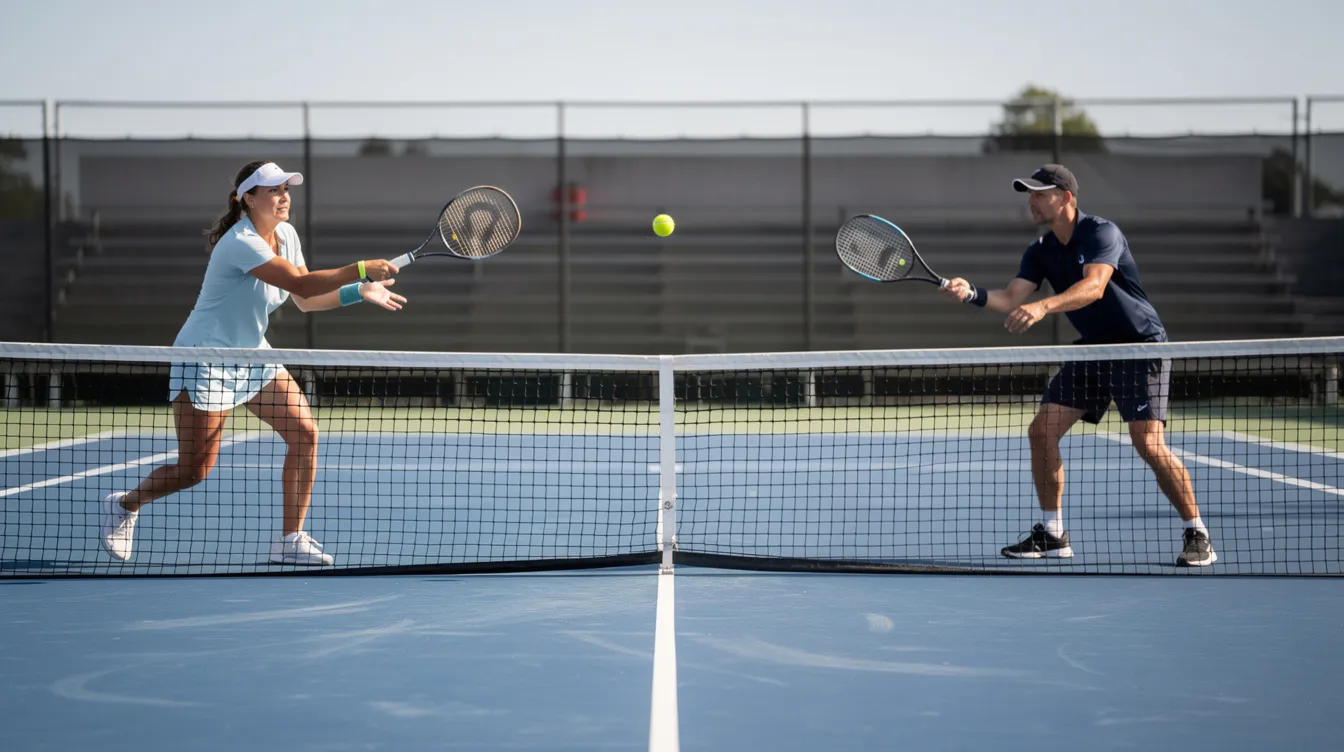
Common Drop Shot Mistakes (And Why Most Players Get This Shot Wrong)
After thousands of observed errors in lessons and league matches, here's my "don'ts" list. Understanding why these fail is more important than memorizing the correct technique.
Technical errors:
- Swinging too big and fast: A full backswing adds unwanted pace so the ball sits up and floats. Your opponent has all day to reach it.
- Using a topspin grip instead of continental: A closed racquet face generates power and depth-the opposite of what you want. The ball lands deep and bounces high, turning your "drop" into an attacking shot for your opponent.
- Gripping too tight: Death grip tension at contact means you can't absorb the ball's energy. The shot flies long or pops up. Soft hands are non-negotiable.
- Contacting behind the body: When you let the ball get beside or behind you, you lose control of trajectory and the ball tends to float or spray wide.
Tactical errors:
- Dropping from far behind the baseline: This is the number one error I see. Even a perfectly executed drop shot from six feet behind the baseline gives your opponent too much time.
- Using drop shots under pressure on defense: If you're stretched and off balance, the drop shot becomes an error waiting to happen.
- Overusing them: Once you've hit three or four in a set, smart opponents anticipate the shot and start creeping forward. At that point, punish them with deep balls and lobs.
One of my students-a 3.5 player-went from about 30% drop shot success to nearly 65% by changing one single thing: he relaxed his grip pressure from a death squeeze to a gentle hold. That alone transformed his touch.
Using Drop Shots in Match Strategy: Singles and Doubles
A drop shot isn't a random trick. It's a tool that fits into a larger tactical account of how you play points.
Singles patterns:
- Hit three or four heavy topspin crosscourt balls to push your opponent deep, then surprise with a drop shot down the line or inside-out
- After moving your opponent wide with an angle, drop the next ball into the open court on the opposite side
- Use drop shots to disrupt an opponent's rhythm, especially against players who thrive in long baseline rallies
- Mix deep balls and drops to prevent your opponent from deciding on a comfortable court position
Doubles applications:
- Drop behind the net player when they're positioned too aggressively at the net and leaving the short court exposed
- Use a soft return on a slow second serve to force the server forward into uncomfortable space
- Combine drop shots with your partner poaching at net for easy volley putaways
Elite players typically use drop shots a few times per set in high-percentage situations. Djokovic once hit 19 drop shots in a single match and only won 7 of them-a cautionary tale about overuse. Moderation and selectivity win more points than volume.
If your success rate is under 50% in matches, use them more selectively or get coaching feedback. PlayYourCourt leagues and match-play partners are a great lab to test new tactics under real pressure.
Stats, Pro Examples, and Why This Approach Works
Drop shot usage among top pros has surged in the 2020s, driven largely by Carlos Alcaraz, who has turned the forehand drop into a genuine attacking shot. According to ATP Tour data, Alcaraz averages about 2.83 rally-ending forehand drop shots per match with a 67.7% win rate, compared to the tour average of roughly 0.85 per match at 51.5%. On the backhand side, he wins about 52.1% versus the ATP average of 39.7%.
Djokovic remains the master of the disguised backhand drop, while players like Ons Jabeur have popularized creative drop shots in the WTA. The common thread among all of them: continental grip, compact mechanics, strict shot selection from green-light scenarios, and relentless disguise.
Key benchmarks for club players:
- Aim for 60–70% success on green-light drop shots in practice
- Target net clearance of 6–12 inches
- The ball should bounce twice before the opponent reaches it in roughly half of successful attempts
- Start with 1–3 drop shots per set and increase as confidence grows
My system works because it mirrors exactly what these pros do under pressure, adapted for the pace and court conditions of recreational play.
How PlayYourCourt Can Help You Master Drop Shots
At PlayYourCourt, we connect you with certified pros who can accelerate your drop shot development through live, on-court feedback. Whether you're working with me or another coach in our network, here's how we help:
- Private lessons: Targeted drills, live correction of grip, swing path, and contact point. We build your drop shot from the ground up in real time.
- Video coaching: Send in clips of your drop shot for slow-motion analysis. You'll receive custom drills and corrections tailored to your specific tendencies.
- Practice partners and leagues: Find local players to test your drop shot under match pressure. Our flexible leagues let you play competitively without a country club commitment.
- Membership perks: Access more posts and video lessons on advanced tennis tips, subscribe to clinics focused on touch shots and net play, and enjoy gear discounts that support your development in the sport.
Subscribe to the PlayYourCourt YouTube channel for more comments and discussion on technique breakdowns. If you want to achieve real improvement, book a lesson and let's get to work.
FAQs About Drop Shots in Tennis
Here are the most common questions I get from players about this technique, covering details not fully addressed above.
Is a drop shot hard to learn for beginner and intermediate players?
The basic motion is simple-short backswing, open face, soft contact-and beginners can learn a functional drop shot within a few weeks of focused practice. True mastery of disguise and match-level execution takes longer, usually several months. Intermediate players often improve faster because they already control depth and spin on their other shots. Even a "good enough" drop shot is dangerous at club level because most opponents simply aren't prepared to sprint forward.
What is the best grip for hitting drop shots?
The continental grip is the most reliable choice for both forehand and backhand drop shots. It allows a seamless transition from volleys, slices, and other touch shots without regripping between every shot. Staying in a forehand topspin grip can work occasionally, but it dramatically lowers consistency and makes disguise nearly impossible. That's why I teach the continental grip first-it's the foundation everything else is built on. For a full grip guide, see How To Hold A Tennis Racquet.
When should I avoid using a drop shot in a match?
Avoid drop shots when you're out of position, stretched wide, or standing well behind the baseline. These situations almost always produce a ball that sits up and gives your opponent an easy attack. Also avoid using them on big pressure points until your success rate in normal points is consistently above 50%. Treat the drop shot as a high-percentage weapon you deploy selectively, not a panic button.
Which surface is the drop shot most effective on?
Drop shots are especially deadly on clay and slower hard courts where the surface friction slows the ball and opponents tend to stand farther behind the baseline. On clay, the ball grips the surface and bounces higher but with less forward momentum, giving it more time to die. On grass, the ball stays low and can skid, which helps your cause if the drop is well-placed. Adjust your target depth and spin based on how the surface plays-aim a bit deeper on fast courts and tighter to the net on slow ones.
How often should I practice and use drop shots?
Practice drop shots in almost every hitting session, even if it's only 5–10 minutes of focused work. Consistent repetition keeps your touch and feel sharp. For match play, start with just a few well-chosen drop shots per set in clear green-line scenarios and track your success rate. As your confidence and results improve, gradually increase the frequency. The goal isn't to become a drop shot maniac-it's to keep opponents honest and win points they never see coming.
When To Use a Drop Shot (And When You Absolutely Shouldn't)
A drop shot is a calculated weapon.
Like any weapon, it’s only effective when used at the right moment.
Use it too early, too often, or from the wrong place on the court, and it’ll blow up in your face. Use it with precision and timing, though, and your opponent won’t know what hit them.
Best Tactical Scenarios for Drop Shots
When Your Opponent Is Out of Position or Fatigued
This is drop shot 101: wait until your opponent is pushed way back behind the baseline, especially if they’ve been running side-to-side or grinding through long rallies. If they’re breathing hard or leaning back as they hit, that’s your green light.
We train our students to read not just where their opponent is, but how they're moving.
If your opponent’s heels are behind the baseline and their weight is shifting backward, a drop shot is not only smart, it’s cruel (in the best way).
After You’ve Pushed Them Back With Deep Drives
Drop shots thrive on contrast. If you’ve been hitting deep, heavy groundstrokes, your opponent gets into a rhythm.
Break it.
After two or three deep shots, change gears with a sudden drop. It’s the tennis equivalent of a curveball after a fastball.
This is how you set up a drop shot, you don’t lead with it. You make your opponent expect depth, power, and spin… then you take it all away.
When They’re a Pusher or Baseline Grinder
You know the type, moonballs, slices, resets.
They love standing eight feet behind the baseline and making everything a war of attrition.
The drop shot is your shortcut to sanity. Bring them forward, force them out of their comfort zone, and take control of the point.
These patterns work beautifully:
- Deep crosscourt forehand → short crosscourt drop shot
- Slice to the backhand → drop shot to the forehand side
- Topspin rally → sudden drop shot when they least expect it
Just remember: pattern first, drop shot second. Strategy always beats spontaneity.
Situations To Avoid the Drop Shot
When You’re Behind the Baseline
If you’re far back, behind the baseline, you’re giving your opponent way too much time to read the shot and chase it down.
The ball has to travel further, bounce higher, and slows down before it even crosses the service line.
Here’s the golden rule: if you’re not at least on or inside the baseline, don’t even think about it.
When Your Opponent Is Near the Net
This one’s obvious, but still worth saying, if your opponent’s already up at the net, a drop shot is hand-delivering them a volley. In this case, you're better off aiming low at their feet or lobbing over them.
If You’re Off-Balance or Rushing the Shot
Drop shots demand control. If you’re off-balance, on the run, or reaching for a tough ball, that control vanishes.
You’ll either float it or hit it into the net. Either way, it’s a free point for your opponent. Reset the point instead. Get back in position.
Overuse = Predictability
Even a good drop shot becomes useless if your opponent sees it coming. Don’t fall in love with it.
Drop shots should be used sparingly and strategically. Think of them as plot twists, not the main story.
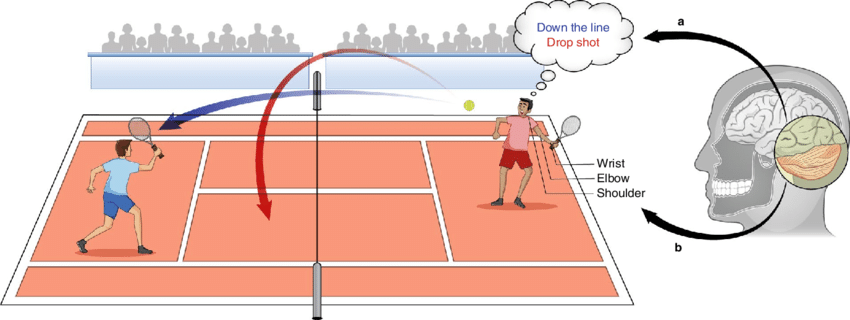
Building the Perfect Point to Set Up a Drop Shot
A great drop shot is earned.
If you want to land drop shots that win points (and not get run down by your opponent sprinting in for a highlight reel pass), you’ve got to build the point the right way.
Think of it like chess. The drop shot is your checkmate, but only if you set up the board first.
Patterns That Create Space for Drop Shots
Most players miss the opportunity to drop shot because they’re not looking at the right patterns to create space.
If your opponent is balanced, centered, and inside the baseline, forget it. But if you can stretch them, tire them, or pull them off the court, the drop shot opens up like a trapdoor.
Deep Crosscourt + Short Same-Side Drop Shot
One of the highest-percentage setups. Hit a deep crosscourt ball that pulls your opponent wide and pushes them back. As they recover, or if they don’t, you hit a drop shot to the same side.
They’ve got to cover both distance and direction change. Most don’t make it.
Wide Angle Forehand + Short Opposite-Side Drop Shot
Use a heavy topspin forehand to stretch your opponent wide, especially if they’re right-handed and on the ad side.
Once you see them off-balance or behind the baseline, surprise them with a soft drop shot to the opposite side.
They’ll have to cover the entire width of the court, and most can’t close the distance in time.
Slice Approach + Drop Shot
This one’s a favorite in PlayYourCourt workshops.
Drive a deep slice to your opponent’s backhand, most rec players struggle with low balls there.
Follow it in. If they float a reply or leave you inside the court, you’ve got the perfect setup to pull off a feather-light drop shot. You’re already in position, they’re on their heels. Game over.
Disguising Your Drop Shot
Even the best setup falls apart if you give the shot away. Disguise isn’t optional, it’s a must.
Masking With a Similar Setup to Topspin
The best drop shots come from swings that look like your regular groundstrokes.
Start the same way: same stance, same take-back. Only at the last second do you shift into the shorter, spooning motion.
Your opponent stays frozen, expecting depth, until the ball drops dead over the net.
Switching Grips Subtly Mid-Swing
This takes practice, but it's devastating when mastered.
You start with your regular grip (say, semi-western), then switch to continental or eastern just before contact. It adds that layer of deception that makes your shot almost impossible to read.
High Take-Back = Strong Disguise
Most players telegraph their drop shot by taking the racket back low and early. That’s a dead giveaway. Instead, keep your take-back high, just like you would for a deep topspin drive.
From there, you can bail into a drop or continue through with power. Your opponent won’t know what’s coming until it’s too late and that’s the whole point.
Surface-Specific Strategy: How the Court Changes the Drop Shot
Not all courts are created equal and neither are drop shots.
The effectiveness of your drop shot can vary wildly depending on the surface you’re playing on.
What might be a winner on clay could be a gift on hard court.
If you want to master the art of drop shots, you’ve got to understand how the court surface changes the rules of engagement.
Drop Shots on Clay Courts
Clay courts are drop shot heaven.
The ball naturally bounces lower, the surface slows down your opponent’s forward movement, and sliding into the ball is tougher than sprinting on hard court.
That means your drop shots bite sooner, sit lower, and give your opponent less time to respond.
Drop Shots on Hard Courts
Hard courts are less forgiving.
The ball bounces higher, travels faster, and your opponent’s recovery time is shorter.
That means your drop shots need to be more precise, better disguised, and used far more sparingly.
If your drop shot floats or sits up on hard court, your opponent can counter-attack from it. And unlike on clay, you’re not buying extra time for recovery or follow-up.
How To Train Your Drop Shot: Drills for Feel, Control & Consistency
Drop shots are about precision, touch, and timing.
And like anything that relies on “feel,” it has to be trained.
You can’t just hit a few half-hearted attempts at the end of practice and expect to drop bombs in matches.
If you're serious about developing buttery-soft hands, mini tennis is your best friend. Start inside the service boxes and challenge yourself to control spin and height without over-swinging.
Mini Tennis
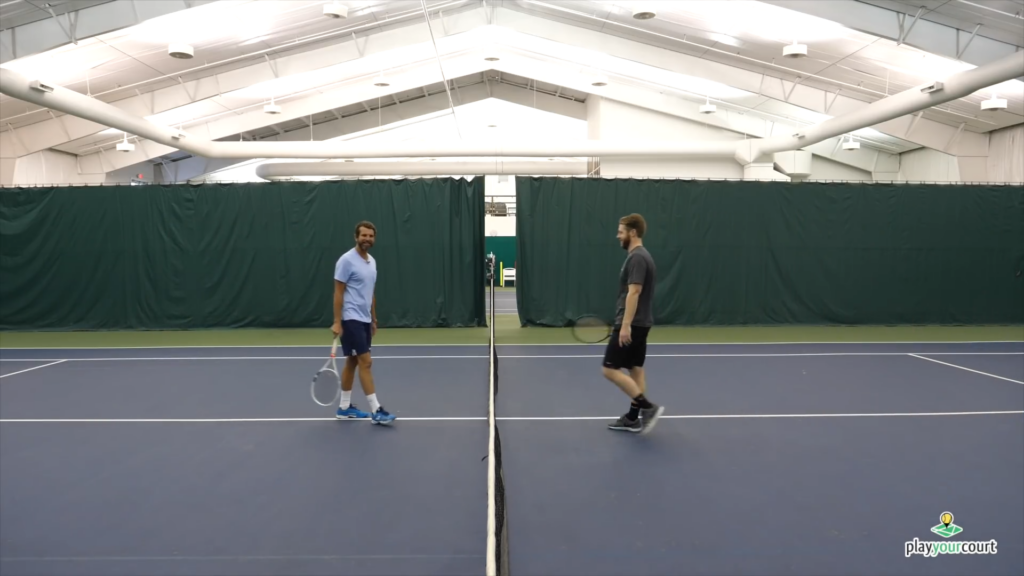
This PlayYourCourt favorite is simple: two players play points inside the service boxes, but can only win with a drop shot that bounces twice inside the service boxes. This builds instincts, soft hands, and drop shot IQ.
“Spin-to-Stop” Challenge
Another killer: hit alternating drop shots that bounce once and stop, or even come back toward the net.
You're training control, not just placement. It also builds a deeper understanding of how spin affects bounce and ball behavior.
Mini Tennis Variations
Backspin-Only Zone Challenge
In this drill, you and your partner stay inside the service boxes and can only hit shots that generate backspin. Mark a zone near the net (like the first 3 feet) and challenge each other to land drop shots in that zone consistently. The constraint forces you to get creative with spin and angle.
Two-Bounce Box Drill
Draw or mark out a small 2x2 foot square close to the net. Your goal? Make the ball land in the box and bounce twice before your partner can touch it. It's brutally honest, either you have the touch or you don't.
Wall & Ball Machine Drills
Don’t have a partner? No problem. Drop shot feel can absolutely be built solo.
Short Backswing + Open-Face Contact Drill
Find a wall and get close, inside the service box range.
Use your continental grip, open your racket face, and work on softly brushing under the ball to generate lift and backspin. Focus on how little you can swing and still get the ball to the wall and back.
Ball Speed Consistency Drill
If you’ve got access to a ball machine, set it to feed slow, short balls inside the service line.
Your goal: hit five drop shots in a row that land in a tight zone near the net with consistent arc and spin. Use targets. Track how often you succeed. Improvement starts with accountability.
Drop Shots That Win Matches (Real Examples & Strategy)
The drop shot is a momentum shifter, a rhythm breaker, and yes, a match-winner.
When used strategically, it can take a player from surviving rallies to controlling the point.
Let’s walk through some real-world examples, from the pros to your local club, and break down how to use the drop shot as a killer tactic.
Case Study: Novak Djokovic’s Disguised Backhand Drop Shot
If there’s a drop shot clinic happening on tour, Novak Djokovic is usually the one running it.
Especially on clay, Novak uses the drop shot not as a last resort, but as a planned weapon. What makes his drop shot devastating is disguise.
Watch any slow-motion breakdown of his backhand drop shot, and you’ll notice this: his take-back looks identical whether he’s going to rip a backhand crosscourt or drop one just over the net.
That’s elite-level disguise. By the time his opponent realizes what’s happening, they’re already a step behind and that’s all it takes.
Club Player Pattern: Deep Rally → Sudden Drop → Net Follow-Up
We’ve coached thousands of players through this pattern because it works at every level. Here’s how it goes:
- Deep ball rally. You play a few solid groundstrokes, pushing your opponent back behind the baseline.
- Sudden drop shot. As soon as you get a slightly shorter ball and you’re inside the court, you switch gears and feather a drop shot.
- Net follow-up. You move in immediately, ready to finish the point with a volley if they chase it down.
Why does this work so well? Because 90% of club players expect the rally to continue at the same pace. The drop shot throws a wrench in the rhythm, and your follow-up shuts the door.
How to Mix In Drop Shots to Beat Pushers
Pushers, the slow ball, moonball, reset-all-day crowd, can drive even good players crazy. They don’t give you pace, they don’t miss, and they never move forward unless you drag them up there.
Enter the drop shot.
Against pushers:
- Don’t wait to be patient, be precise.
- Mix in the drop shot after pulling them wide or getting a short ball.
- Make them hit something uncomfortable, a low, short ball with pressure.
And when they finally start creeping in to defend against it? That’s when you go back to driving it deep behind them.
Next Steps: How to Master Drop Shots with PlayYourCourt
If you’ve made it this far, you’re learning that drop shots are strategy, precision, and pressure rolled into one.
Whether you’re a player stuck grinding from the baseline or a competitor looking for more tactical variety, adding a consistent, well-disguised drop shot to your toolkit can absolutely change your game.
And that’s exactly where PlayYourCourt comes in.
We've built our entire platform around game improvement — not just finding partners or booking lessons, but helping players solve the exact problems that hold them back.
If you're tired of feeling stuck at the same rating... if you’ve ever lost to a pusher and didn’t know how to break them down... or if you just want to stop playing reactive tennis and start playing tactical tennis, then mastering the drop shot is your next big leap forward.
👉 Try our PlayYourCourt membership. We’ll help you get there faster.
Keep Improving


Similar Posts
- Find Tennis Partners Fitness Home Page Feature Improve My Game Quality Family Time Tennis Tennis Tips for Kids
Reasons You Should Play Tennis
Thinking about learning to play tennis? Or maybe picking up a racket after years away from the sport? There’s so many reasons why you should! Read below our countdown of the top 10 reasons to play tennis brought to you by PlayTennis.com.
How To Get Started Playing Tennis
Read the 7 tips below on how to get started playing tennis: 1. Make the mental decision to begin [sc:optin-box-modal slug=”add-15″ linktext=’Bonus: Watch “Add 15 MPH To Your Forehand With This Simple Fix”‘ bgcolor=”F8F1DE” linkcolor=”000000″ ] Like anything else, you need to want to do something in order to do it. Maybe you’ve…
Beginner Tennis Lessons for Adults
Congratulations! If you’re reading this, you’ve made (or are on the verge of making) a great decision to be one of the millions out there taking beginner tennis lessons for adults. You can play tennis no matter how old you are. You’ve probably heard people say this a million times, and I’m going to say…
Wimbledon or World Cup? They actually have a lot in common
World Cup Fever? I’ll be honest. I caught it. This “illness” even trumped my Wimbledon viewing the past two weeks. But I’m okay with it. After all, the World Cup only comes once every four years. I am one of the growing number of Americans who love soccer—almost as much as I love tennis. It’s…
Featured Posts Find Tennis Partners Fitness Home Page Feature Improve My Game Quality Family Time Tennis13 Signs You Are Obsessed with Tennis
13. When someone asks about your partner, you immediately think of your doubles partner. Someone asks you about your partner and your response is something like, “Good, they’re finally getting their first serve in” or “Not bad, but I hate it when (s)he tries to do a Bryan Brothers chest bump.” It’s okay, as long…