How To Return Big Serves In Tennis (A Step‑By‑Step Guide)
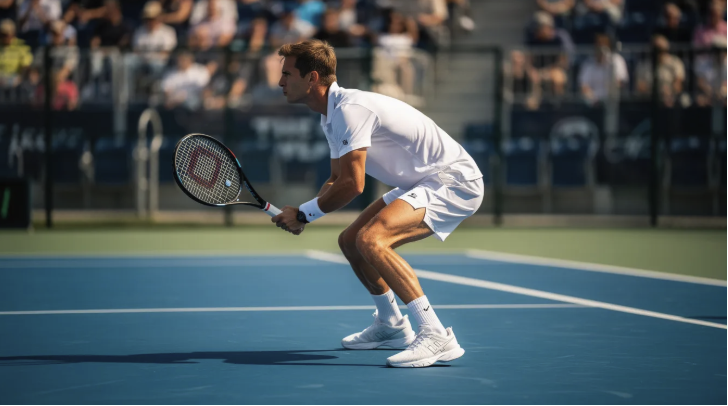
Returning a fast and big serve is one of the most important skills in tennis, yet it’s the drill most players never practice. If you’ve ever stood across the net from a big server and felt helpless, this guide is for you. Below, we’ll walk through everything a beginner needs to neutralize hard serves and turn them into opportunities.
Key Takeaways
- The best way to handle a fast serve is to prioritize getting the return in with a simple block return rather than swinging for a winner. A strong return doesn’t always need to be aggressive.
- Stand approximately three feet behind the baseline, time your split step with the server’s contact, and keep your backswing short. These three fundamentals solve most return problems instantly.
- Different types of big serves – flat, slice serve, and kick – require small adjustments in positioning, contact height, and target, not a completely new swing.
- This guide includes a step-by-step serve recognition walkthrough, concrete drills, two practical tables (common errors/fixes and a weekly practice plan), and links to PlayYourCourt resources so you can keep improving.
Why Big Serves Feel So Hard (And How We’ll Fix That)
Imagine you’re playing a simple match. Your opponent tosses the ball, unloads a flat first serve at 85 mph, and by the time you react, the ball is past you. Sound familiar?
Here’s what makes big serves feel impossible. First, your reaction time shrinks dramatically – against a serve traveling 85-100+ mph, you may have well under half a second to read, decide, and swing. Second, spin complicates everything: a flat serve stays ball low and fast, a slice curves sideways, and a kick serve jumps above your head. Third, the pressure and intimidation of facing a big server can cause you to tense up and abandon your fundamentals.
The good news: focusing on getting the returns in consistently is far more effective than trying to hit the ball hard. Your first goal against any big serve is to neutralize it – get a deep, safe return back into play – rather than hoping for a winner. That single mindset shift changes everything.
These are the same principles PlayYourCourt coaches teach adult beginners and youth players in lessons across the U.S. Let’s break it down.
Step‑By‑Step: How To Recognize And Approach A Big Serve
Think of this as your pre-shot checklist. Before the ball even crosses the net, you can gain a real advantage by reading the right cues.
Step 1 – Read the situation. Before your opponent tosses, notice their patterns. Do they favor a big first serve out wide on the deuce court at 40-15? Do they go down the T under pressure? Keeping mental notes of these tendencies – something the best serve strategists do instinctively – helps you expect what’s coming on the next point.
Step 2 – Watch the toss and motion. Anticipating the serve involves watching the server’s toss and shoulder rotation. A toss straight ahead with full extension usually means a flat fast serve. A toss shifted to the side signals a slice. A toss behind the head suggests a kick. These cues appear before the ball is even struck.
Step 3 – Split step. Start bouncing lightly on the balls of your feet. Use a split step timed to land exactly as the server contacts the ball. This loads your legs so you can push off in any direction instantly.
Step 4 – Decide forehand or backhand. React with your outside foot – right foot for forehand, left foot for backhand if you’re right-handed. Turn your shoulders immediately as the ball leaves the strings. Track the ball from the opponent’s service motion all the way to your racquet.
Step 5 – Short preparation. Turn your shoulders and set the racquet slightly back, but resist the urge to take a full groundstroke backswing. Keep your backswing short and the racquet head in front of your body line. An abbreviated take-back is your friend against pace.
Step 6 – Contact and target. Hit the ball out in front of your body at roughly hip height. Swing compactly through contact and aim deep and towards the middle of the court. This is the safest target with the highest margin for error over the net.
Step 7 – Recover. Finish with your weight going forward, then recover back toward a neutral position on or just behind the baseline, ready for the next shot.
Where To Stand And How To Set Up For Fast Serves
Good positioning is often the quickest fix for beginners who feel rushed. It costs nothing and buys you precious milliseconds.
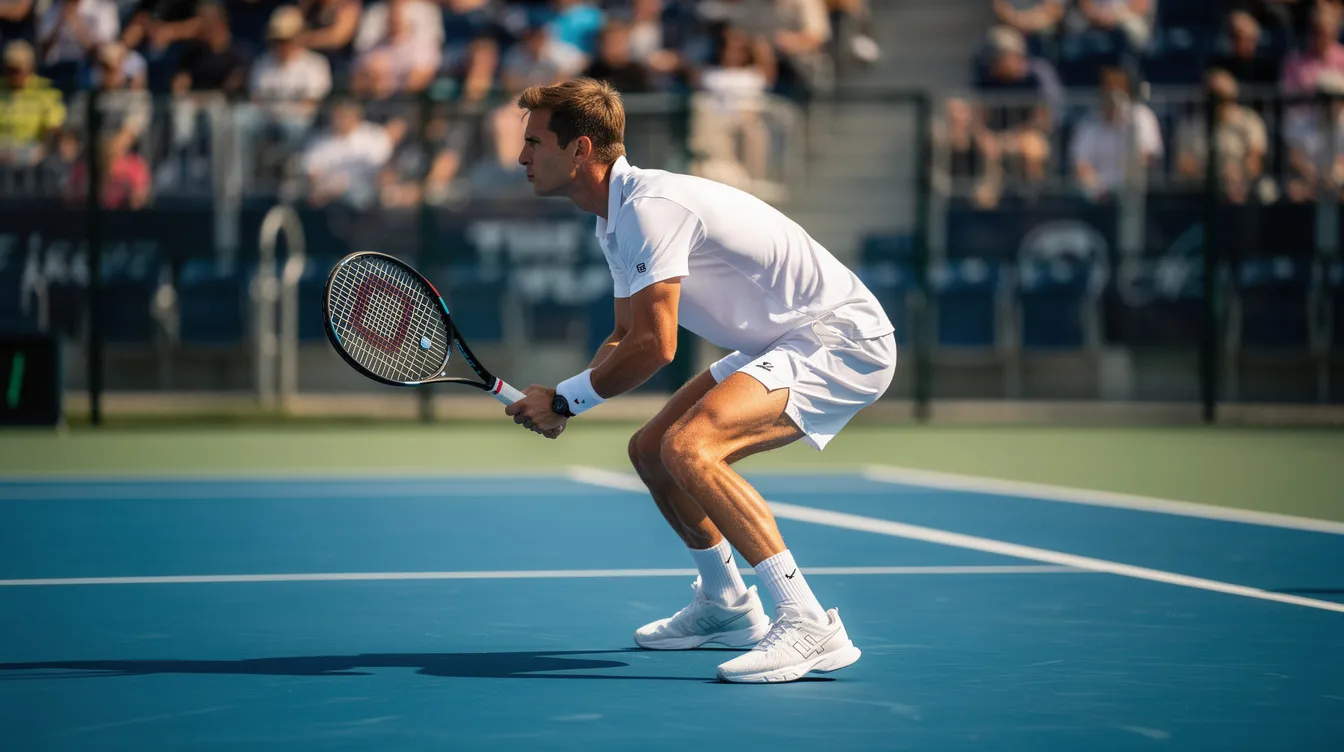
Stand approximately three feet behind the baseline as your default return position. Standing two to four steps behind the baseline offers extra reaction time against big serves – this alone can transform how comfortable you feel. Laterally, position yourself roughly between the center mark and the wide corner, then adjust your position based on your opponent’s serving style. If they hammer the T, shade a bit toward the middle. If they love the wide serve, cheat a half step toward the sideline.
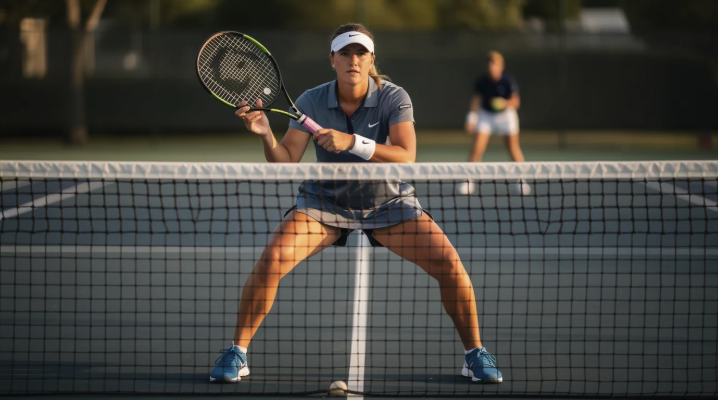
Your ready stance should feature a wide athletic stance – feet slightly wider than shoulders – which enhances lateral movement during returns. Keep knees bent, weight forward on the balls of your feet, and hold the racquet in front at chest height with a continental grip or something close to it. A loose grip (maybe 4 out of 10 tension) keeps your hands quick.
In doubles, stand a half step closer to the service line and aim more crosscourt to avoid the net player. In singles, favor returning deep middle to cut off angles.
One pro-level reference: watch how players returned against Andy Roddick’s 150 mph bombs. They stood well behind the baseline and used compact swings – no matter how fast the serve, positioning and simplicity gave them enough time to react.
Core Technique: The Block Return – Your Best Way To Handle Big First Serves
The block return is your primary weapon against any fast serve. Think of it as using the opponent’s pace instead of generating your own power.
Use a continental grip so you can handle both forehand side and backhand block returns without drastic grip changes. Here’s the sequence:
- Execute your split step as the server strikes.
- Make a small shoulder turn – racquet slightly back, not a full swing.
- Punch forward through the ball with a short, compact motion.
- Follow through just enough to direct the shot, then recover.
Use a block return to absorb the pace of fast serves rather than fighting it. Contact the ball out in front of your hip with a stable wrist, focusing on meeting the center of the strings for clean contact. You’re redirecting, not generating.
Your targets should be deep down the middle or deep crosscourt with plenty of net clearance. Prioritize getting the return back into play over speed or sharp angles. A good return that lands deep in the court is worth far more than a flashy attempt that flies long.
When is the block return ideal? Against first serves over roughly 85-90 mph at the recreational level, when you’re off-balance, or when the server is simply on fire. Think of it as a volley feel from the baseline – you’re absorbing pace like a half volley but standing further back. If you already know basic volleys, you’ll pick this up fast.
Adjusting For Different Big Serves: Flat, Slice Serve, And Kick
A “big serve” doesn’t always mean just fast. It can be flat and fast, heavily sliced, or kicked high with wicked spin. Each demands slightly different adjustments, but the core block or compact drive return stays the same.
Flat fast serve. This one comes straight, stays low, and gives you almost no bounce to work with. Stand a bit deeper behind the baseline, keep the racquet face slightly closed so you don’t pop the ball up, and aim higher over the net. The speed does the work – just redirect it.
Slice serve. A slice curves sideways after it hits the court, often pulling you off the court toward the other side. Shade a half step toward the sideline where you expect it to land, and meet the ball slightly earlier before it curves away from you. Keep a firm wrist so the spin doesn’t slide the ball off your strings. For a deeper breakdown, check out how different types of spin affect the bounce in this LTA guide on serve spins.
Kick serve. The ball jumps high, especially to the backhand. Back up a step, let the ball drop a bit from its apex, and aim crosscourt with a more relaxed, higher swing arc. PlayYourCourt has a dedicated guide on how to return kick serves that goes deeper into this adjustment.
The key takeaway: don’t invent a brand-new swing for each serve type. Keep your backswing short for effective returns and just tweak your position, contact height, and target direction.
Footwork, Timing, And Staying Relaxed Under Pressure
Most missed returns against hard serves come from late reactions and tight muscles, not poor stroke mechanics. Fix your feet and your tension level, and the shot often takes care of itself.
Timing the split-step precisely improves return effectiveness more than almost any other single change. Land as the server contacts the ball, both feet touching down simultaneously, knees slightly flexed, ready to push off. React as the server contacts the ball – not before, not after.
Keep footwork simple: one quick adjustment step toward the ball, plant, and swing. Avoid long lunging steps that throw your balance off, especially on the backhand side. You want to step forward into the return when possible, getting your weight moving forward through contact rather than falling backward.
Stay fully focused during the return of fast serves by staying physically loose. Keep your grip relaxed, exhale as you hit, and consciously unclench your jaw and shoulders. Between points, take one deep breath, visualize a deep middle return, and settle into your ready position. These small routines reduce anxiety before another big serve.
Many PlayYourCourt video lessons and on-court sessions work specifically on reaction and rhythm. Check out the Return of Serve playlist on the PlayYourCourt YouTube channel for visual walkthroughs you can study before your next match.
Common Return Of Serve Errors (And How To Fix Them)
Below is a quick-reference table of the most frequent mistakes beginners make when returning big serves. Print it out or screenshot it for your next practice session.
| Error | What Happens | Fix |
|---|---|---|
| Standing too close to the baseline | You feel rushed and can’t control the return | Move back 2-3 feet behind the baseline to gain reaction time |
| Taking a full groundstroke swing | Late contact, frequent error, ball flies long | Shorten to a block return – shoulder turn only, no big backswing |
| Aiming for corners on first serves | Low percentage shot leads to unforced errors | Aim 3-4 feet higher over the net and target deep middle |
| Watching the server’s body instead of tracking the ball | Late read on direction and spin | Focus on tracking the ball from the server’s motion – toss, racquet, then ball flight |
| Freezing feet (no split step) | Can’t move laterally, stuck flat-footed | Practice the split step on every single serve, landing as server makes contact |
| Misreading serve type (e.g., not recognizing a slice) | Wrong positioning, reaching desperately | Watch the toss height and shoulder rotation earlier in the serving motion to identify spin |
| Gripping the racquet too tightly | Slower hands, less feel, arm tension | Hold at about 4/10 grip pressure; loosen fingers between points |
Each of these fixes is something you can isolate in practice. Pick one per session, work on it for 15-20 minutes, and you’ll see results within a few weeks.
Drills And Techniques To Train Your Return Against Fast Serves
Practicing return drills improves timing and reaction speed faster than just playing matches. Here are four drills any beginner can run with a partner or coach.
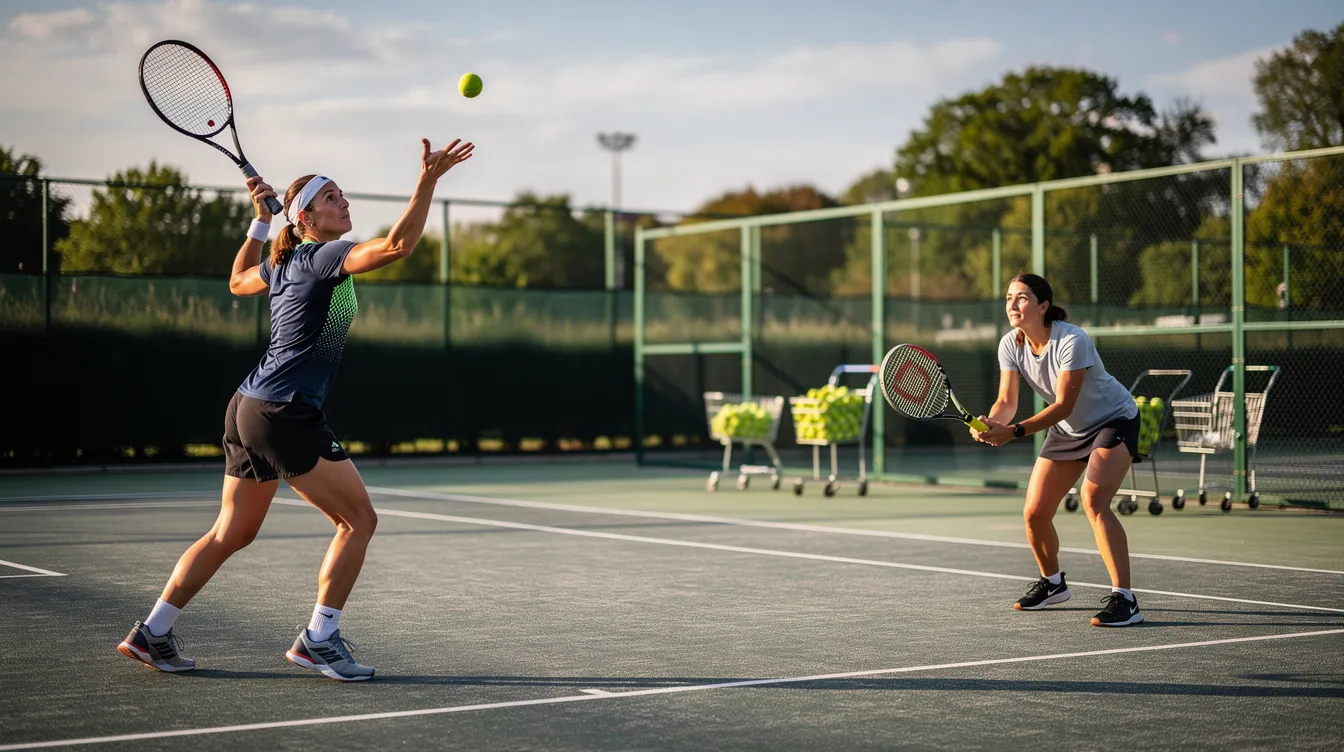
Block Return Feeder Drill. A partner hits medium-fast serves from the baseline. You stand three feet behind the baseline and work only on block returns aimed deep middle. Count how many you make out of 10. Goal: 7/10 in play. For more structured drills, explore tennis drills for intermediate players.
Shadow Return Drill. No ball needed. Go through the full sequence – ready position, split step, shoulder turn, compact swing, recovery – for 10-15 reps on each side. This grooves the motion and builds muscle memory you can use at home practice sessions too.
Reaction and Split-Step Drill. A coach or partner calls “wide,” “T,” or “body” right at the toss. You react with a split step and first step in the correct direction. Do this without hitting balls first, then add live serves.
Serve Machine or Basket Drill. Set a ball machine to flat, fast feeds. Start at moderate speed, practice block and compact drive returns, and gradually increase speed as consistency improves. Practicing with partners builds the necessary reaction time for fast serves even more than machines, so mix both.
Weekly Practice Plan: Table Of Drills To Build Long‑Term Return Skills
Here’s a sample weekly schedule for a busy adult or youth player who wants to build lasting improvement against big servers.
| Day | Activity | Duration | Focus |
|---|---|---|---|
| Monday | Shadow returns + split-step drill | 15 min | Footwork timing, muscle memory |
| Tuesday | Block return feeder drill with partner | 30 min | Compact swing, depth targets |
| Wednesday | Video study – PlayYourCourt YouTube serve return videos | 20 min | Note 2-3 cues to try next session |
| Thursday | Ladder drills, side shuffles, medicine-ball rotations | 20 min | Explosiveness for split step and lateral movement |
| Friday | Reaction drill + live match-play points starting with big serve | 30 min | Pattern recognition under pressure |
| Weekend | Flexible league match or practice set | 60 min | Apply skills against real opponent’s serve variety |
At the end of each week, track your progress: log “returns in play out of 20” against a friend’s first serve or a ball machine setting. This simple number reveals trends over 4-8 weeks.
Use PlayYourCourt’s practice partner and flexible league options to make sure you regularly face real serves from different types of servers, not just one hitting partner.
How To Tell If You’re Actually Improving Your Return Of Serve
Improvement should be measured, not just felt. Even beginners can track a few simple stats.
Keep a small notebook or phone note after each match or practice session. Record practical metrics like:
- Percentage of first-serve returns made in play
- Number of returns landing beyond the service box (deep returns)
- Reduction in outright return errors on big points like 30-40 or break points
A log entry might look like: “12/20 first serves returned vs. Mark’s flat serve on July 24, 2026.” Over a month, you’ll see the trend.
Qualitative signs of progress matter too. You’ll know you’re improving when you feel less rushed, when you recognize a slice or kick serve earlier, when you can use the block return on demand, and when you start winning more rallies that begin with the opponent’s big serve. Any consistent sign of calm under pressure – rather than hope and panic – means the work is paying off.
Even a 5-10% higher return-in rate over a month can significantly change your match results at the recreational level. Consider checking in monthly with a PlayYourCourt coach to review return footage and identify your next focus area.
When And How To Use PlayYourCourt To Accelerate Your Progress
Self-practice gets you started, but coached feedback accelerates the course of improvement dramatically.
Booking a private lesson with a certified pro through PlayYourCourt lets you have a coach feed specific fast serves and give real-time feedback on your stance, split step, and block return technique. This targeted work is the fastest path to a consistent service return.
PlayYourCourt also offers video coaching where you can record your return-of-serve drills, upload clips, and get personalized analysis – including advice on reading tosses and spotting spin earlier.
The platform helps you find local hitting partners and flexible leagues so you face a variety of serves, not just one friend’s style. You can apply pressure in real match situations, which is where improvement truly sticks. Membership perks like gear discounts keep your racquet setup consistent, which matters more than most players realize.
Start with the free serve-return tip videos on the PlayYourCourt YouTube channel and build from there.
FAQ: Returning Big Serves In Tennis
What should I do if my opponent’s fast serve is wildly inconsistent?
Be patient on first serves – many will miss. The real opportunity is aggressively targeting weak second serves to gain control of the point. When the second serve comes in shorter and slower, step forward inside the baseline and hit the ball with more force to apply pressure. This contrast between patience and aggression will win you games.
Can changing my racquet setup help me return big serves?
Yes, a bit. A slightly heavier racquet provides more stability on block returns, and lower string tension gives you a larger sweet spot with more power on contact. However, equipment changes are secondary to technique – no racquet will fix a late split step or a massive backswing. Get the fundamentals right first.
How should youth players learn to handle fast serves safely?
Start with softer feeds from the service line and gradually increase speed and distance. Young players should never be thrown into returning full-speed serves before they’ve developed proper block return mechanics and confidence. Fear leads to bad habits. Build skill progressively and the speed will feel manageable over time.
How often should I practice serve returns to see real improvement?
Two to three dedicated return sessions per week over 4-8 weeks typically produces measurable improvement. The key is consistency – even 15 minutes of focused block return practice beats an hour of unfocused play. Practicing return drills improves timing and reaction speed more than just playing sets.
How do I handle nerves when facing a big server in a tournament or league match?
Simplify your goal. Instead of trying to win the return, just focus on getting one more ball back in play. Use a deep breath between points, visualize your return landing deep in the center of the court, and trust your trained reflexes. The best returners in history – Agassi, Djokovic – succeeded not through power but through calm preparation and consistent execution. No matter how fast the serve, your game plan stays the same: read, split step, block, recover.
Keep Improving