How To Hit A Faster Serve In Tennis (From Nate, PlayYourCourt Pro)
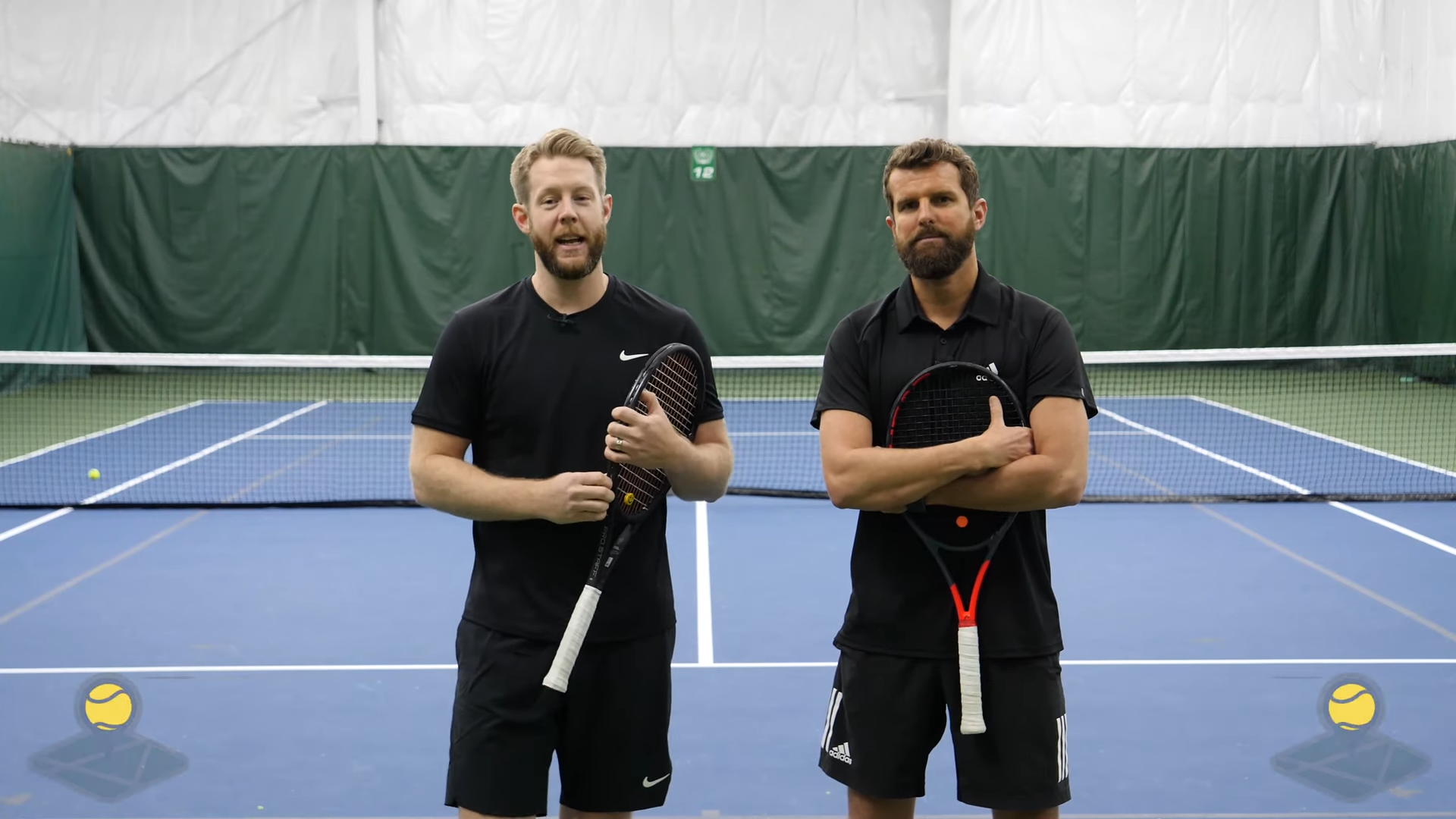
If you want to know how to hit a faster serve, you’ve landed in the right place. This guide breaks down the exact system I use with hundreds of students each year to add real, measurable miles per hour without wrecking their arms or sacrificing consistency. No fluff, no magic racquet recommendations – just the mechanics, drills, and training that actually work.
Key Takeaways
- A faster serve comes from a fluid throwing motion, efficient body sequencing, and smart training – not from swinging harder or muscling the ball. Improving tennis serve speed requires proper mechanics and specific training techniques.
- Most club players serve between 70–90 mph. Advanced recreational players reach 100+ mph. The ATP Tour average first serve sits around 118–120 mph. Sam Groth holds the all-time record at 163.7 mph (2012, Busan Challenger). Aryna Sabalenka recorded the fastest WTA serve at approximately 136.7 mph.
- Players can gain 4–8 mph in serve speed within 6–8 weeks with focused technique work, and 8–15 mph over a full season when adding strength and mobility training.
- I’ve logged thousands of coaching hours with adult and junior players through PlayYourCourt and developed a tested system for building serve speed safely and permanently.
- Below you’ll find step-by-step technique fixes, common mistakes and why they fail, serve speed drills, and links to PlayYourCourt YouTube videos so you can see everything in action.
Why You’re Not Serving Faster Yet (And Why You Should Trust Nate)
I’m Nate, a Tennis Pro with PlayYourCourt. I’ve spent over 15 years coaching tennis, thousands of private lessons across USTA tournament players and weekend warriors, and I specialize in rebuilding adult serves from the ground up.
Here’s what I see over and over: most people walk onto the court thinking they need more arm strength, a bigger jump, or to simply squeeze the grip harder and muscle the ball into the service box. That approach almost always produces the opposite result – slower serve speed, a sore shoulder, and a heap of frustration.
After testing different teaching methods on hundreds of PlayYourCourt students, I consistently see the fastest gains when we focus on throwing mechanics, proper sequencing, and high-intent practice sessions rather than raw effort.
“I picked up 12 mph on my flat serve in eight weeks without changing racquets – just by fixing my toss and adding hip rotation work.” – Jason, 4.0 USTA Dallas
This post is the definitive guide for serious recreational players (3.0–5.0) who want measurable improvement, not just prettier form. Let’s get into it.
Understand Serve Speed: What’s “Fast” & What The Pros Actually Do
Before you can serve faster, you need to know where you stand. Here’s a realistic speed breakdown:
| Level | Typical First-Serve Speed |
|---|---|
| Beginner | 50–70 mph |
| Solid club player | 80–100 mph |
| Advanced recreational | 100–115 mph |
| WTA Tour average | 102–106 mph |
| ATP Tour average | 118–120 mph |
The fastest recorded tennis serves push well beyond those averages. Sam Groth hit 263.4 km/h (163.7 mph) at the 2012 Busan Challenger. John Isner recorded 253 km/h (157.2 mph) in Davis Cup play. On the women’s side, Sabine Lisicki clocked 131 mph at a WTA main draw event, while Aryna Sabalenka has been measured at 214 km/h.
What separates these players from the rest isn’t arm size – it’s racquet head speed generated through an efficient kinetic chain. Pros look relaxed because their entire body feeds energy into the racket in the right sequence. Even their second serves stay above 90 mph on a radar gun thanks to spin and body mechanics.
Adding 8–15 mph to your current serve is completely realistic over a season with what you’ll learn below.
The Throwing Motion: Stop “Pushing” And Learn To Whip The Racket
This is the single biggest unlock for serve speed, and it’s where I start with nearly every student. A fluid throwing motion is essential for serve speed – without it, nothing else matters.
Most club players “push” the ball with a straight arm and locked wrist, like they’re pressing a weight overhead at the gym. That motion kills racquet speed and creates elbow pain because all the force isolates in the joint instead of flowing through the chain. A fluid and continuous motion produces more power than a segmented serve motion every single time.
The fix is simple in concept: serve like you’re throwing a baseball or football overhand.
- Your arm stays loose from the shoulder down
- Your elbow leads as you swing up to the ball
- Your forearm whips forward naturally
- Pronation carries the racquet through contact
Maintaining a relaxed arm allows for faster whip effect during the serve. If you squeeze your grip tight at the beginning of the motion, you destroy all of that elastic energy. Keep your hand and wrist loose – think about holding a bird, not strangling a snake.
Here’s a drill you can do today: stand on the baseline without a ball. Shadow-serve while focusing only on “throwing the racquet head” up and out. Imagine you’re throwing the tip of the racket through a spot three feet above the net. You should hear a clear “whoosh” at the top of your swing. No whoosh? You’re pushing, not whipping.
For a full visual breakdown, check out How 3 FINGERS Can Add 15+ MPH To Your Serve on the PlayYourCourt channel, where you’ll see slow-motion comparisons from front and side views.

Build A Faster Serve From The Ground Up: Stance, Balance & Leg Drive
Pros use their entire body as a spring. Recreational players generally stand flat-footed and swing mostly with arm and shoulders. That difference alone can account for 10–15 mph.
Stance choice matters. I recommend platform stance for most club players learning to hit a faster serve. It’s simpler, more stable, and keeps your balance centered. Pinpoint can work at higher levels, but copying a tour player’s foot slide before you’ve mastered the basics creates more problems than it solves.
Balance fundamentals: Start with weight mostly on your back foot and your chest turned sideways toward the side fence. During the motion, shift into a strong trophy position without leaning or falling backward. Stay balanced throughout the entire service motion. Finish in a controlled landing inside the court. If you’re falling off-balance after serving, that indicates a bad serve – you’re leaking momentum sideways instead of channeling it forward.
The 3-second rule drill: After every practice serve, freeze your landing for three seconds. If you’re stumbling or falling in any direction, you know power and consistency are escaping.
Leg drive is crucial for transferring power through the body during the serve. Instead of trying to jump as high as possible, cue yourself to “push the ground away and extend up into the ball.” Use both legs to jump up into the serve – both legs to generate power, not just your dominant side. Avoid excessive knee bend that throws off your timing. A moderate, athletic bend gives you the best combination of force and control.
The Toss: The Silent Killer Of Serve Speed
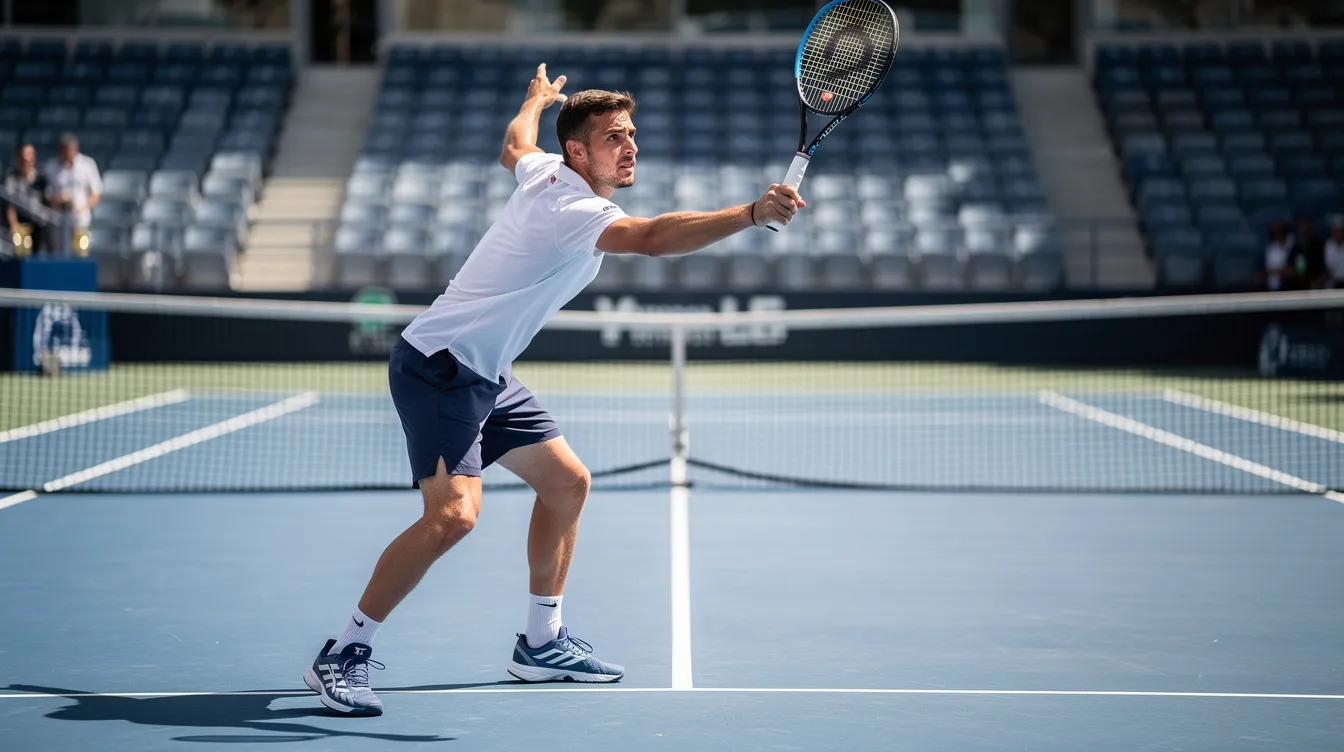
In my experience, roughly 70–80% of the slow serves I fix start with a poor toss. It’s the silent killer because players forget about it and focus on their swing instead.
A consistent ball toss is important for accurate and powerful serves. A proper toss affects timing and balance during the serve, which means if it’s off, everything downstream falls apart.
Here’s where to place a flat-serve toss:
- Slightly in front of the baseline (about 12–18 inches inside the court)
- A bit to your hitting-arm side – tossing slightly in front and to the right enhances power for right-handers
- Toss the ball as high as you can reach with your racket – the peak should land just above comfortable full extension, not several feet above your head
Why too high is a problem: When you toss too high, you wait, lose rhythm, tighten up, and let momentum die. Your body stalls in the middle of what should be a continuous motion. Tossing behind your head forces a weak, arming motion and strains the back and shoulder.
The bounce-test drill: Practice tossing without hitting until the ball consistently lands 6–18 inches inside the baseline and just to your dominant side. Make this a standalone daily habit for 5–10 minutes. For more detail, see Tennis Tip: Fix Your Ball Toss to Improve Your Serve.
Different toss placements set up different serves – flat, slice, kick – but master one reliable power toss first to build a foundation. That takes time, and it’s the most boring drill in tennis, but I hope you’ll trust me that it pays off faster than anything else.
Arm, Wrist & Pronation: How To Create Real Racket-Head Speed
This is where players create the final burst of swing speed that turns a decent serve into a weapon. More power comes from swinging faster in the right direction with the racquet face aligned properly at impact. Muscling with a tight upper body usually slows the swing.
Here’s the correct sequence:
- In the trophy position, your shoulder externally rotates, your elbow is bent, and your forearm and wrist stay loose
- Achieving a deep racket drop creates lag for significant racket head speed – let gravity pull the racquet head down behind your back
- From there, rapid internal rotation of the shoulder fires the arm upward
- Reach full extension at contact for maximum power while serving – a high contact point increases the angle into the court for harder hits
- Pronation of the forearm during contact maximizes force and protects the shoulder
A continental grip is essential for maximum wrist snap and pronation. Without it, you’ll block the natural rotation and cap your racquet speed well below what your body can produce.
The “serve snap” drill: Stand close to the net with a continental grip and practice hitting serves with minimal leg drive. Focus only on forearm pronation and a loose wrist. Feel the whip and listen for the whoosh. You should feel the strings momentarily face the side fence, then rotate all the way forward through the ball.
A common misconception I see constantly: players trying to “keep the palm facing the target” through contact. That locks the arm and dramatically limits racquet head speed. Let your hand and forearm rotate naturally – that’s how pros create pace without effort.
Use Your Core & Rotation To Add Effortless MPH
Pros generate much of their serve speed from torso and hip rotation, not biceps. From the trophy position, the body unwinds like a coil. Body coiling during the trophy position stores energy for the forward swing – and the more efficiently you unwind it, the faster you serve.
An efficient kinetic chain involves legs, hips, trunk, shoulder, and arm working in sequence. Here’s how it flows:
- Legs drive upward
- Hips start to turn toward the net
- Torso follows a split-second later
- Shoulder and arm lag behind, then whip through
This “lag then snap” effect is what creates explosive racquet speed without extra muscle. Good shoulder and waist rotation adds power to your serve by multiplying the force from your lower body.
Research on 42 competitive players found that skill level, height, hip external rotation range of motion, and lower-limb power explained roughly 84% of the variation in serve speed. That’s strong scientific confirmation that this full-body approach works.
Standing rotation drill: Without a racquet, get into your trophy position. Practice turning your chest from facing the side fence to facing the net while keeping your hitting arm relaxed. Feel the trunk lead the motion and the arm follow.
Common error: Opening your chest too early during the toss. This kills the coil and forces an arm-only swing. Keep your front shoulder higher and closed longer to develop more stored energy.
Training For Serve Speed: High-Intent Sessions, Radar Guns & Smart Volume
Knowing the right technique is only half the battle. You need structured practice to make it happen in a match. Here’s how I structure serve speed sessions for busy adults and youth tennis players.
An ideal 45–60 minute session looks like this:
- 10 minutes of dynamic warm-up (arm circles, band work, light rallying)
- 10 minutes of rhythm and technique drills at 60–70% effort
- 15–20 max-intent serves per side with 15–20 seconds of rest between each
- 10–15 minutes of targeted accuracy work, aiming wide and at the T
The key is “high intent but relaxed aggression.” Cue yourself to swing as fast as you can while keeping the arm loose. Missing the service box is acceptable during speed blocks – you’re training your nervous system to fire faster, not playing a point. Practicing with intent helps improve serve speed and consistency far more than mindless basket feeding.
A radar gun is essential for tracking serve speed improvements. If you don’t have one, smartphone apps paired with external sensors work fine. Track your personal bests and your average serve speed week over week. That feedback loop accelerates the process like nothing else.
What to avoid: Marathon sessions of 200+ serves without rest. Fatigue ruins mechanics and can cause shoulder and elbow injury. My guideline is 40–80 quality serves in a focused session, two times per week, with adequate rest between. For more on building consistency during these sessions, read The Secret To A More Consistent Serve.
Off-Court Strength, Power & Mobility For A Faster, Safer Serve
You don’t build a faster serve only on the court. Increasing lower-body strength, core stability, and shoulder power supports higher racquet speed without overloading joints. Resistance training can improve serve speed through strength and power development – the science is clear on this.
A study of elite junior players found strong correlations between knee and hip torque and serve velocity. Strength and power programs in tennis and overhead sports have been shown to increase serve or throw velocity by 10–25% over 6–9 months.
Here are the exercise categories I recommend:
- Rotational power: Medicine ball rotational throws, cable woodchops
- Shoulder stability: Band or cable external rotation for the rotator cuff
- Leg drive strength: Single-leg squats, lunges, kettlebell swings, jump squats
- Mobility work: Wall slides and open-book rotations for thoracic spine and shoulder range of motion – these maintain the flexibility required for a deep, safe trophy position
Don’t overlook mobility. Limited hip rotation or thoracic stiffness means you can’t coil properly, which caps your speed no matter how strong you get. For a full training framework, check out How To Train For Tennis | Speed, Strength, Balance.
PlayYourCourt members can follow structured off-court programs recommended through video coaching, tailored to age, current fitness, and injury history.
Gear Tweaks That Actually Help Your Serve Speed (Without Ruining Your Arm)
I only tweak gear after technique and timing are reasonably sound. Buying a new racquet won’t fix a broken kinetic chain.
That said, equipment does matter at the margins:
- Racquet weight and balance: Adding weight to your racquet head increases force when hitting. Adding lead strips to the racquet head is the easiest way to experiment. But be aware that heavier racquets can decrease racquet head speed if you can’t swing them fast enough – find the sweet spot.
- Racquet length: A longer racquet can provide more power in shots and creates a higher contact point, but it also changes maneuverability.
- String tension: String your racquet with less tension for more power. Dropping from, say, 58 lbs to 52 lbs can add a few mph and create a livelier feel. Change in small increments (2 lbs at a time) and monitor control and elbow comfort.
- String type: Avoid ultra-stiff polyester strings at high tension if you’re an older or less-trained player. Multifilaments or hybrid setups are more arm-friendly and can still deliver pace.
The bottom line: gear changes might give you 1–3 mph. Technique changes can give you 8–15 mph. Respect the order of operations.
Matchplay Strategy: How To Use Your Faster Serve To Win More Points
Increasing serve speed only helps if you deploy it intelligently. Hitting the ball flat creates more pace on the serve, but smashing every first serve at maximum effort with zero direction isn’t strategy – it’s hope.
Here are the target patterns I teach:
- Deuce side: Wide to pull the returner off court, or down the T to jam them and shorten the court
- Ad side: Wide into the backhand (against right-handers) or body serves to eliminate their swing
- Serving down the T slightly shortens the distance the ball travels, effectively making the serve “play faster” even at the same speed
Recommended approach by level:
- 3.0–3.5 players: Focus on a solid, faster first serve to the body or T. Don’t aim for corners yet.
- 4.0+ players: Mix flat first serves with spinnier but still aggressive seconds. Use Tennis Serve Strategy | Where To Serve as a guide for placement.
One of my students, a 4.0 league player, added 10 mph to his flat serve, then learned to dial it back to 60–70% effort for match play. His first-serve percentage jumped from 48% to 63%, and he started holding serve consistently for the first time in his playing career. Speed plus control is the game.
Practice “live ball” patterns with a hitting partner – 10-minute blocks serving only to the T or only wide, tracking how often you win the first shot after your serve.
How PlayYourCourt & Nate Help You Serve Faster: Lessons, Video Coaching & Partners
PlayYourCourt gives you access to certified tennis pros like me for private lessons, plus flexible leagues and practice partners to test your faster serve under real pressure.
Here’s what a typical in-person lesson with me looks like:
- Serve speed baseline measurement with a radar gun
- Video analysis of your toss, balance, and throwing motion
- One or two key changes – never more, because overloading kills retention
- A custom practice plan for the following week
Video recording your serve can help identify key mechanical issues that are invisible in real time. PlayYourCourt’s video coaching option lets you send serve clips from your phone. I mark them up with slow-motion feedback and tailored drills matched to your body type, age, and goals – whether that’s adult tennis, youth tennis, competitive or social.
Members can also find local practice partners and leagues through the platform, so you’re not just feeding baskets alone – you’re testing your improved serve in real match situations. For a deep dive into the full system, explore The Serve Accelerator System.
Subscribe to the PlayYourCourt YouTube channel for free serve clinics, Q&A sessions, and ongoing tips from our team of pros.
FAQs About Serve Speed & Hitting A Faster Serve
Below are the most common questions I get from players and from Google’s “People Also Ask” results about serve speed and faster serves.
What is a good serve speed for a recreational tennis player?
For intermediate adult players, 70–90 mph is a typical and respectable serve speed. If you’re consistently hitting 90–105 mph, that’s strong for recreational play. Don’t get caught up chasing pro-level numbers. At the club level, consistency and placement generally win more points than raw speed. Aim to develop a reliable first serve you can land 55–65% of the time before obsessing over the radar gun.
How can I increase my tennis serve speed quickly?
Focus on four priorities: fix your toss position so it’s consistent and in the right place, learn the true throwing motion with proper pronation, run one to two high-intent serve sessions per week with adequate rest, and add light off-court strength work for your legs and core. Many of my students gain 5–10 mph in 4–8 weeks following this exact process. For a step-by-step video walkthrough, watch How To Hit Faster Serves on PlayYourCourt.
Does lifting weights help you serve faster?
Yes – when done correctly. Properly designed strength and power training targeting legs, core, and shoulder stabilizers absolutely supports higher serve speed. But technique and timing are still the main drivers. I warn players against heavy bodybuilding-style chest and shoulder work without matching mobility training. That combination builds bulk that actually restricts the range of motion you need for a full trophy position and deep racket drop.
Is it better to hit a flat serve or a spin serve for more speed?
Flat serves produce the highest numbers on a radar gun, so if raw speed is your goal, that’s your starting point. However, a heavy topspin or slice serve can “play fast” because of how the ball jumps or skids after the bounce. The smartest approach: develop one reliable flat first serve for pace, and a spinnier but confident second serve for safety. For more on building a dependable second serve, read How To Develop Your Second Serve.
Can changing my racquet or strings really add serve speed?
Small gains – typically 1–3 mph – are possible with a slightly heavier racquet, head-light balance, or lower string tension. But those are marginal compared to what technique changes deliver. If your kinetic chain is inefficient, no racquet in the world will make up for it. Fix your mechanics first, then fine-tune your gear as a finishing touch.
Keep Improving